Job Opportunities for Ship Crew in the China Market: A Major Opportunity for Indonesian Maritime Workers

Job Opportunities for Ship Crew in the China Market: A Major Opportunity for Indonesian Maritime Workers

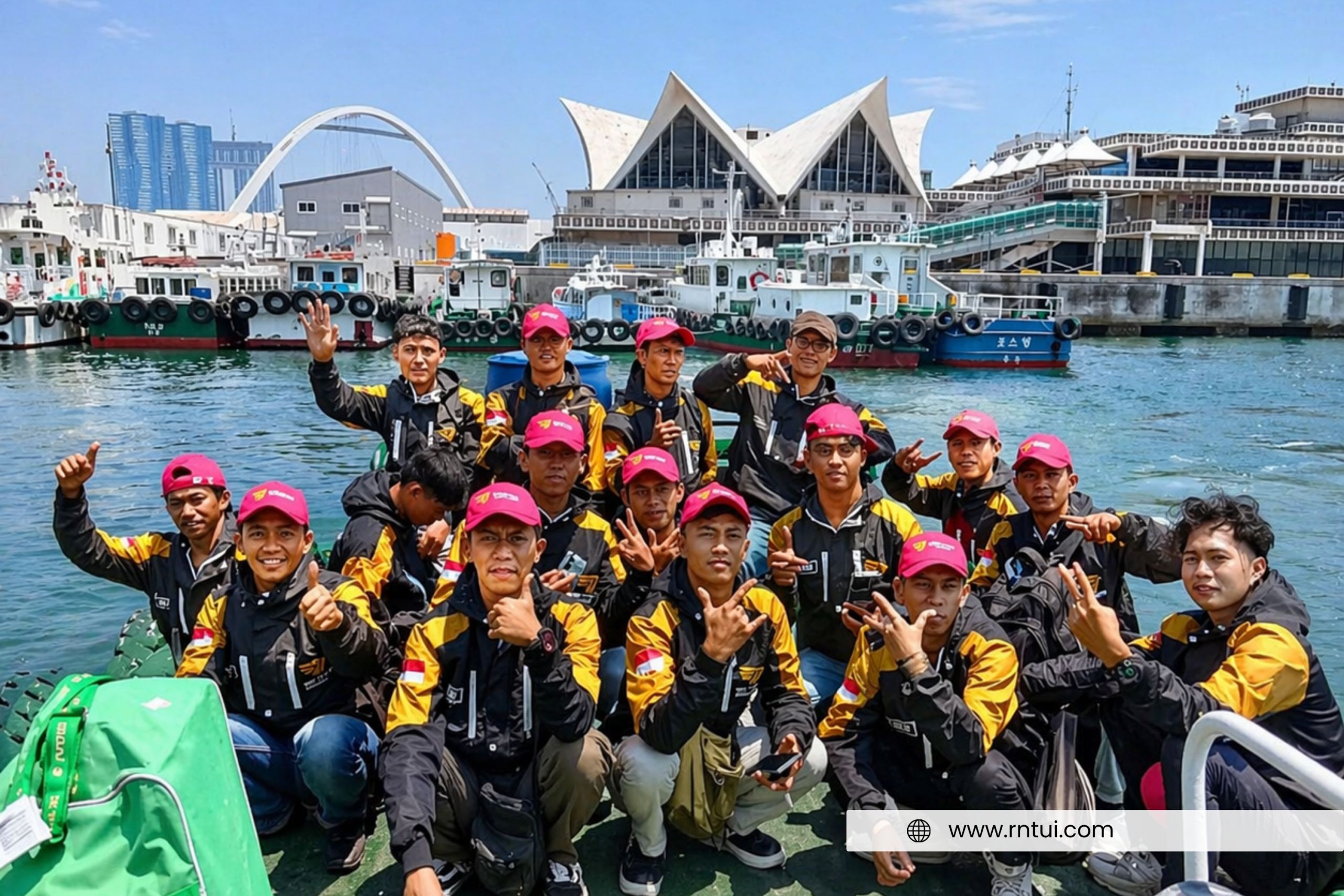
The international fishing and maritime industry continues to grow rapidly, especially in the Asian region. One of the countries with a high demand for maritime workers is China. With a large fleet of vessels operating throughout the year, the need for ship crew members (ABK) remains consistently high.

For Indonesian workers, this creates significant job opportunities. Indonesia is widely recognized as a strong source of maritime labor, known for physical endurance, work discipline, and adaptability in challenging sea conditions.

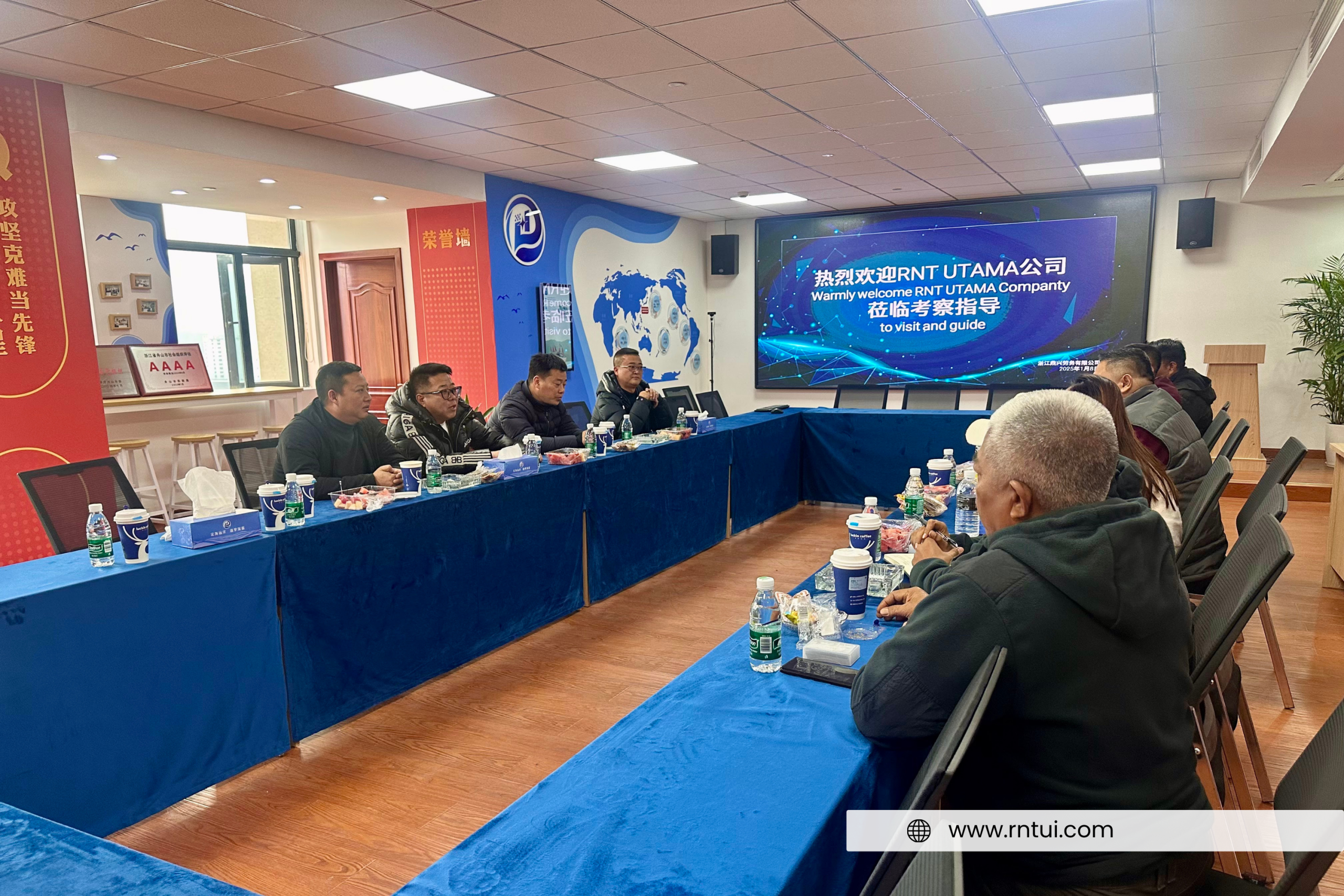
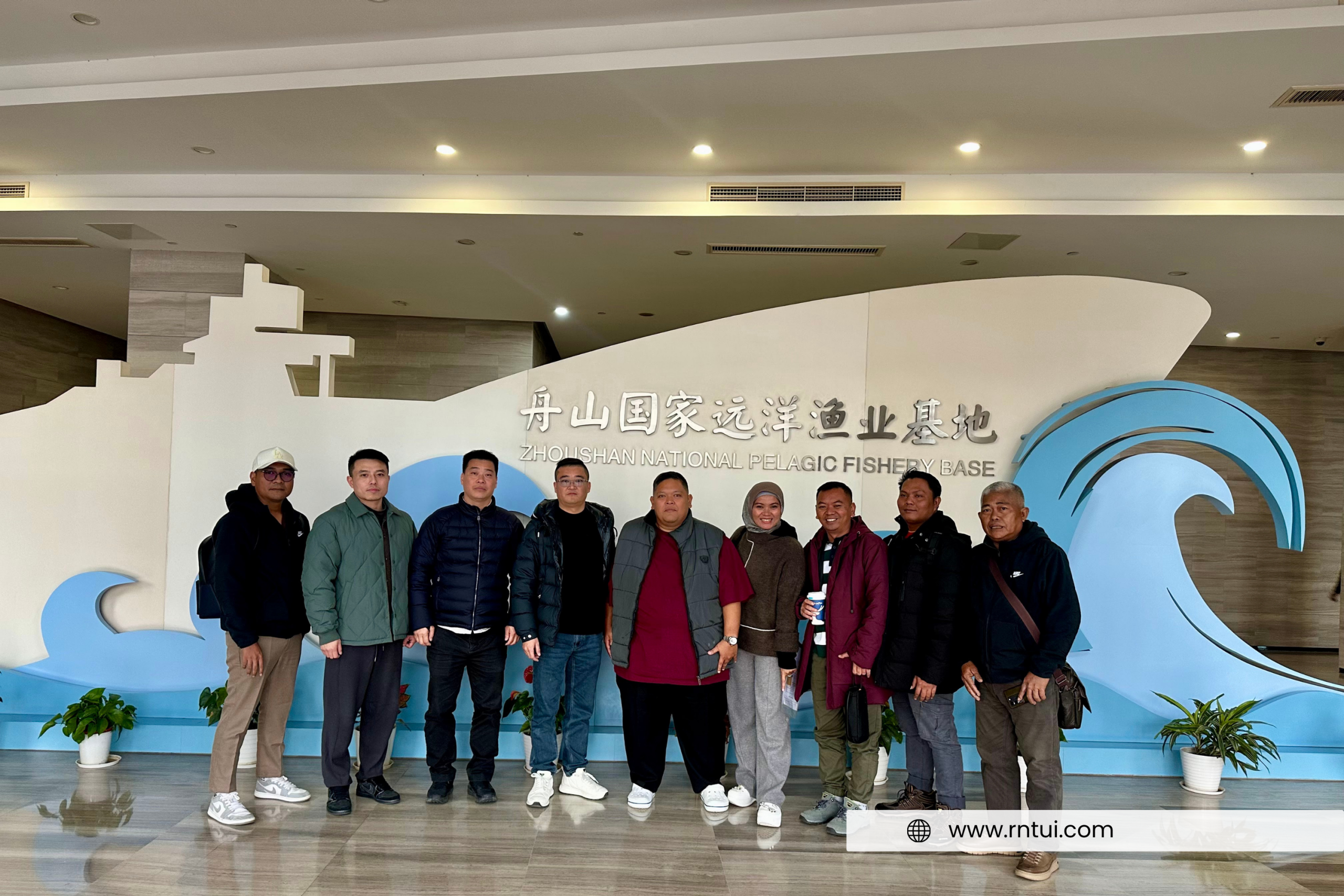
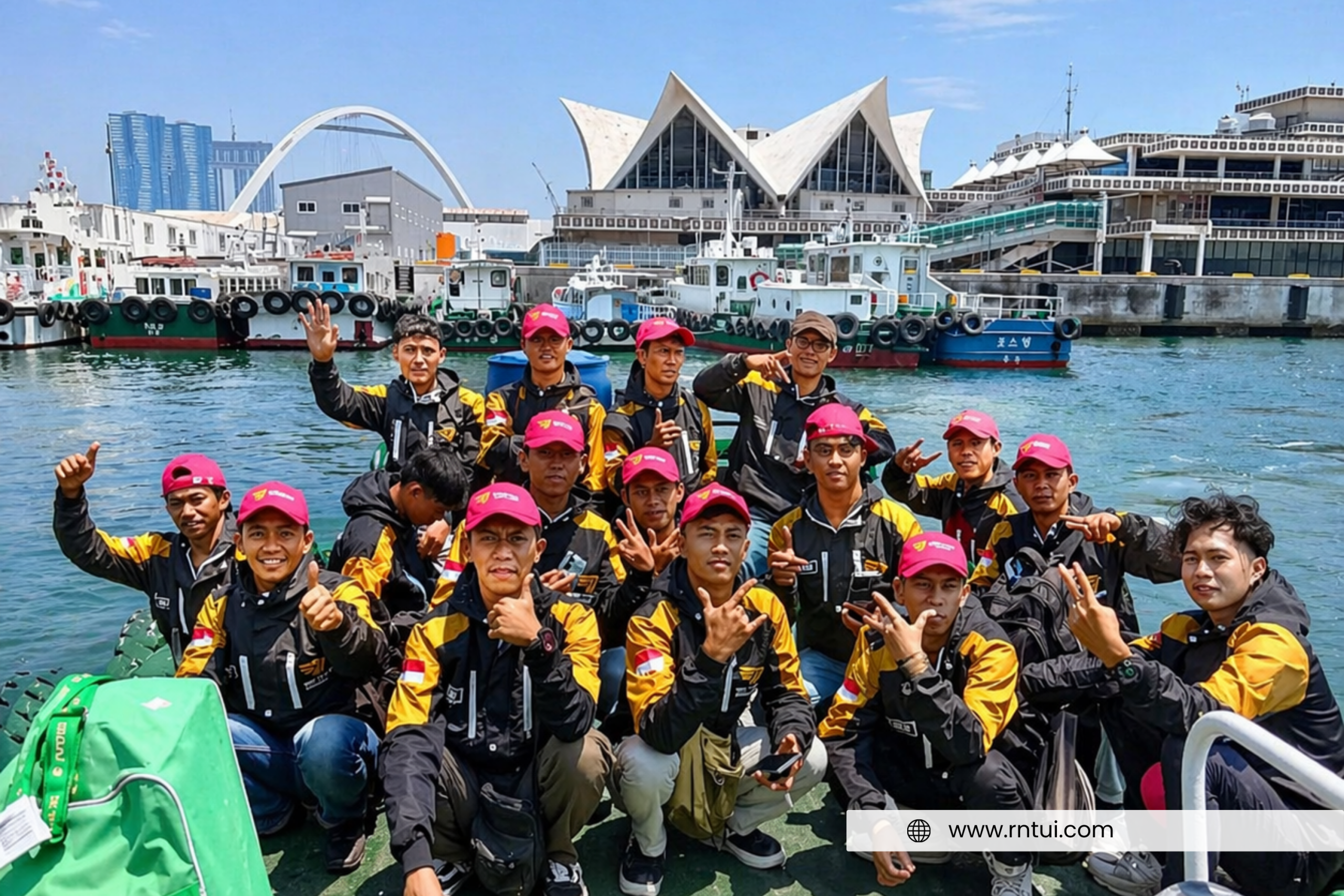
Through its global network, PT RNT Utama Indonesia continues to connect Indonesian workers with international vessels, including those in the China market, which has become one of the key destinations for crew placement.

High Demand for Ship Crew on Chinese Vessels

China has one of the largest fishing industries in the world. Many vessels operate in international waters and require a substantial number of crew members to maintain operations.

Several factors contribute to this high demand:

  • A large number of active vessels
  • Year-round operational activities
  • Demand across various vessel types (squid, longline, trawl, etc.)
  • Extensive fishing operations across different regions

This creates stable and continuous employment opportunities for international workers, including those from Indonesia.

Why Indonesian Workers Are Highly Sought After

Indonesian maritime workers have built a strong reputation in the international shipping industry. Many foreign companies, including those from China, rely on Indonesian crew members to meet their workforce needs.
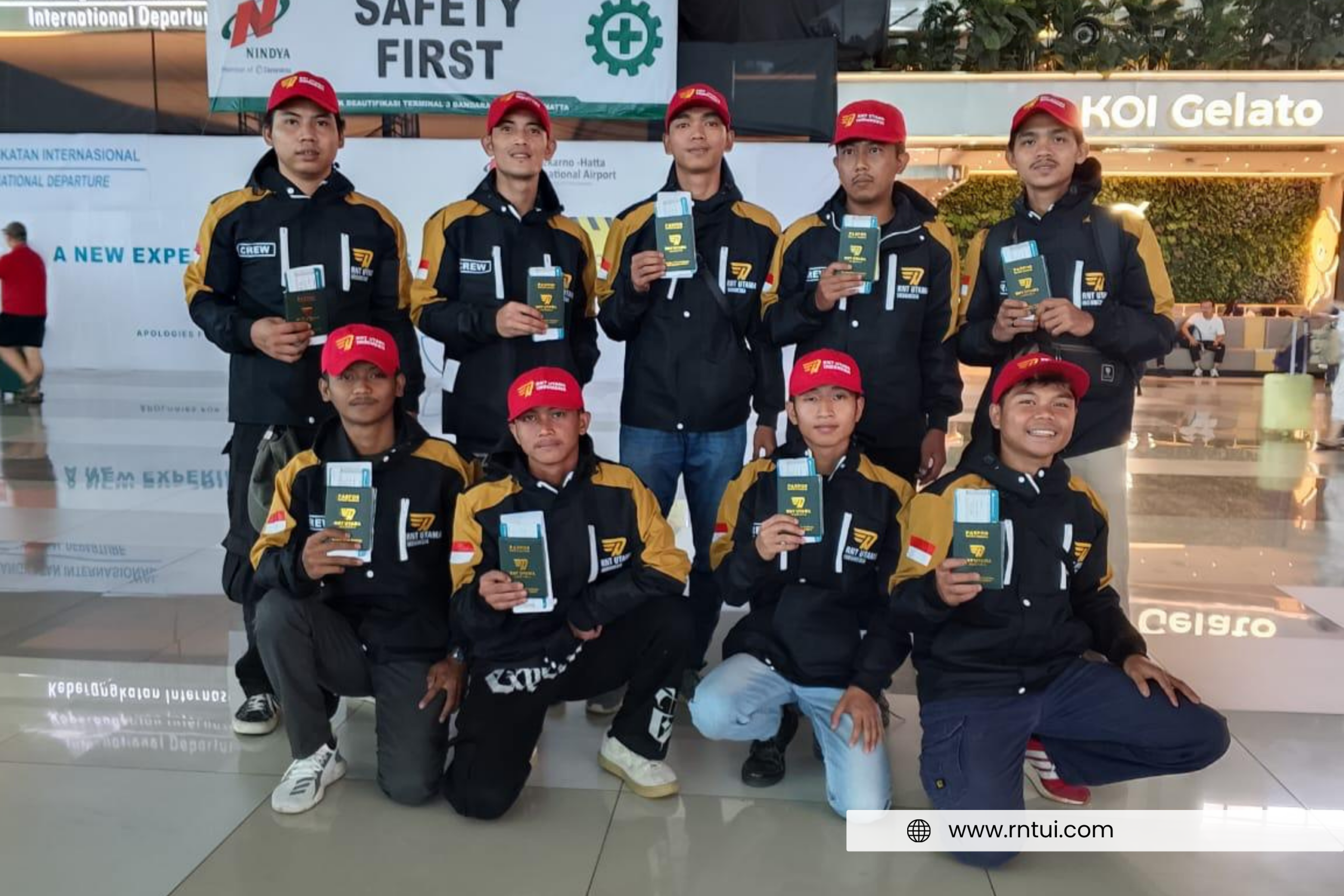
Key strengths include:

  • Strong physical endurance
  • Ability to adapt quickly to working conditions
  • Discipline and teamwork
  • Experience across various vessel types

These qualities make Indonesian crew members one of the preferred choices in the global maritime workforce.

Opportunities for Both Experienced and Non-Experienced Candidates

One of the key advantages of the China market is the availability of opportunities for both experienced and non-experienced candidates.

For experienced crew:

  • higher chances of placement
  • faster recruitment process
  • opportunities for higher positions

For non-experienced candidates:

  • entry-level opportunities are available
  • access to training programs
  • ability to build experience onboard

With proper training and structured recruitment, these opportunities can be maximized.

Types of Vessels Hiring Crew

The China market includes various types of vessels, each requiring different skills and roles. Some of the most common include:

  • Squid vessels (Samba)
  • Longline vessels
  • Trawl vessels
  • Light seiner vessels

Each vessel type has different working systems, equipment, and operational patterns, offering diverse opportunities for crew members.

The Importance of Choosing a Legal Recruitment Path

Despite the large opportunities, candidates must be careful in choosing the right recruitment channel. Many risks come from unclear or illegal processes.

Through professional companies like PT RNT Utama Indonesia, the placement process is:

  • legal and compliant with regulations
  • transparent in terms of contracts
  • structured from selection to deployment
  • directly connected with vessel partners

This ensures safety, job security, and clarity for all crew members.

The Role of PT RNT Utama Indonesia in Accessing the China Market

As a company with an extensive global network, PT RNT Utama Indonesia continues to expand partnerships with international maritime companies, including those in China.

Through these partnerships, the company is able to:

  • provide direct access to international vessels
  • ensure professional placement processes
  • maintain workforce quality
  • open wider employment opportunities

The presence of verified global partners proves that these opportunities are real and sustainable.

Long-Term Career Opportunities in the Maritime Industry

Working as a ship crew member is not only about short-term income, but also about building a long-term career.

With experience, crew members can:

  • advance to higher positions
  • secure repeated contracts
  • expand international work experience
  • improve their financial stability

Many Indonesian workers have successfully improved their livelihoods through careers in the maritime sector.

Conclusion

The China market represents one of the largest opportunities for Indonesian maritime workers. With high demand for crew and continuous vessel operations, job opportunities remain widely available for those who are prepared.

However, these opportunities must be approached with proper understanding and the right recruitment path. By working with professional and trusted companies like PT RNT Utama Indonesia, candidates can go through the process safely, professionally, and with greater certainty.

Stay updated with the latest job opportunities for the China and international maritime market through our official channels.
Opportunities are always open for those who are ready and qualified.

Website: www.rntui.com
Instagram: @rntutama.id

Don’t miss your chance to work on international vessels. Start preparing today and join through an official and professional recruitment process with PT RNT Utama Indonesia. 
Frequently Asked Questions About Working as a Ship Crew (ABK): Requirements, Salary, Risks, and Full Process

Frequently Asked Questions About Working as a Ship Crew (ABK): Requirements, Salary, Risks, and Full Process

The interest of Indonesian workers in becoming ship crew members (ABK) on international vessels has continued to grow in recent years. This profession offers competitive income and the opportunity to gain international work experience.

However, despite the high interest, many candidates still have doubts due to a lack of clear and accurate information. Many rely on hearsay without fully understanding the actual process.

As a result, common questions arise such as: Is it safe to work on international vessels? How much is the salary? Can beginners apply? And what is the correct application process?

As a company specializing in crew placement, PT RNT Utama Indonesia has compiled the most frequently asked questions along with detailed explanations to help you understand the reality of working as a ship crew member.

1. What are the requirements to become an international ship crew member?

Becoming a ship crew member is not an instant process. There are several requirements that must be fulfilled, both administratively and personally.

In general, the requirements include:

  • Valid identification (ID card, family card, etc.)
  • Seaman Book
  • Basic Safety Training (BST) certificate
  • Medical check-up certificate
  • Police clearance certificate

However, documents are only the first step. What matters more is your readiness in terms of:

  • physical condition
  • mental strength
  • basic work skills

Many candidates fail not because of documents, but because they are not ready for the real working conditions at sea.

2. Can beginners become ship crew members without experience?

Yes, it is possible, but not without preparation.

Some vessels do open opportunities for non-experienced candidates, especially for entry-level positions. However, candidates are still required to:

  • attend training
  • understand basic ship duties
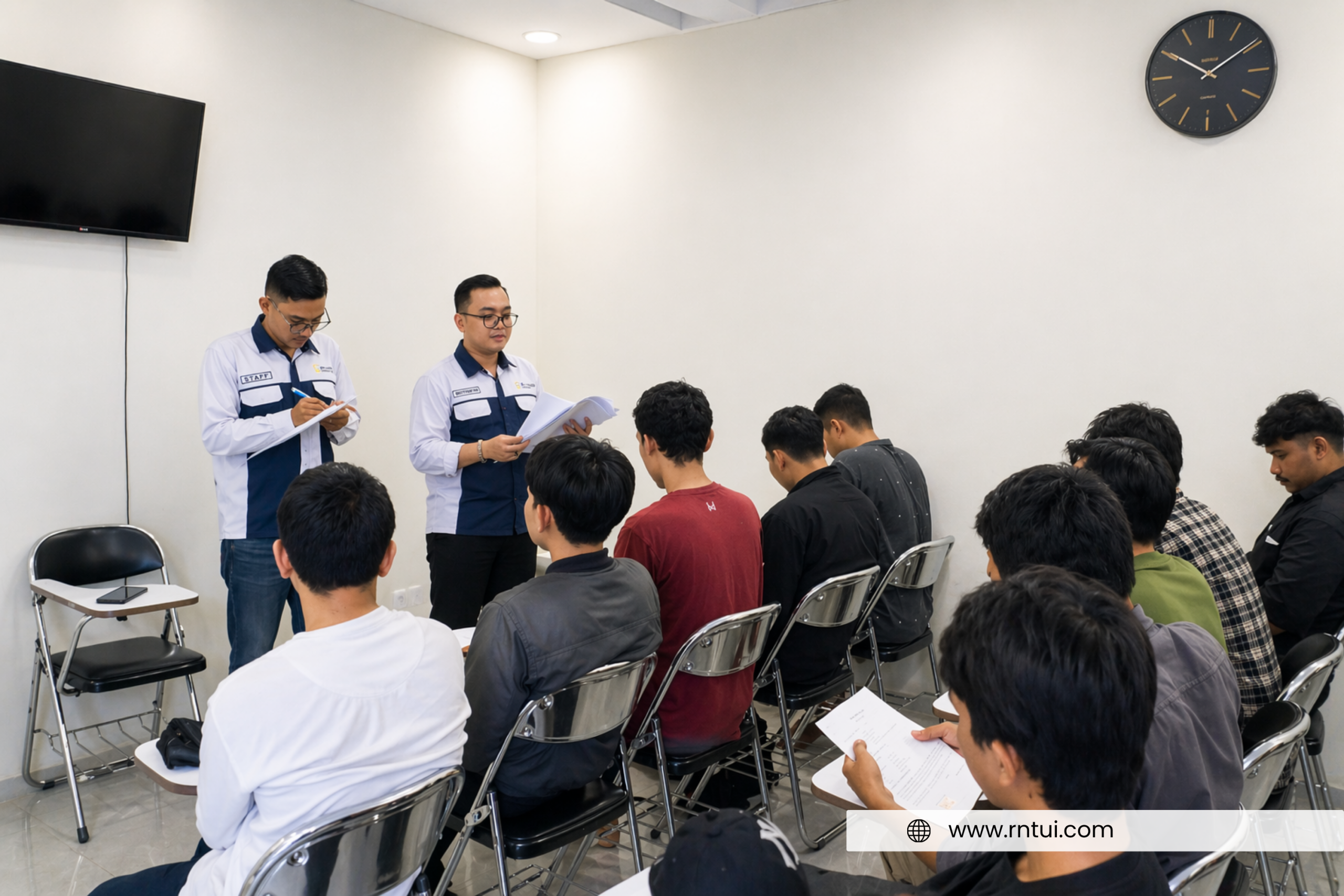
  • pass competency tests

Companies like PT RNT Utama Indonesia maintain strict selection standards to ensure that even beginners are ready for deployment.

3. How much is the salary of a ship crew member?

Salary is one of the main reasons why many people are interested in becoming ABK. However, it is important to understand that salaries vary depending on several factors:

  • type of vessel
  • job position
  • experience
  • destination country

In addition to salary, crew members usually receive:

  • meals and accommodation onboard
  • bonus opportunities
  • minimal daily expenses

This means that although the work is demanding, the opportunity to save money is significantly higher compared to land-based jobs.

4. How long is the contract period?

Typically, contracts range from:

  • 6 to 12 months, depending on the vessel and company

During the contract period, crew members stay onboard and do not return home. This can be a major challenge, especially for those not used to being away from family.

5. Is working on an international vessel safe?

Safety depends largely on the recruitment channel.

If you apply through a professional company like PT RNT Utama Indonesia, you will benefit from:

  • clear employment contracts
  • legal and structured processes
  • proper crew placement systems

However, going through unofficial channels can result in:

  • high risk of fraud
  • lack of legal protection
  • unclear working conditions

This is why choosing the right agency is crucial.

6. How long does the process take from application to deployment?

Many applicants expect a fast process, but in reality, it takes time.

The process includes:

  • initial selection
  • document preparation
  • training
  • competency testing
  • waiting for vessel demand

The duration varies, typically:
👉 a few weeks to several months

The more prepared you are, the faster your chances of deployment.

7. Are there any costs involved?

This is a critical question, as it is often misused by irresponsible parties.

In a legitimate process:

  • certain costs do exist (documents, training, etc.)
  • but they must be transparent and reasonable

Be cautious if:

  • fees are unclear or excessive
  • promises of fast deployment without process
  • no official receipts are provided

Always ensure that you go through a trusted company.

8. What are the risks of working as a ship crew member?

Like any job, working as an ABK involves certain risks:

  • physically demanding work
  • high work pressure
  • long periods away from family
  • unpredictable sea conditions

However, with proper preparation and legal processes, these risks can be significantly minimized.

9. Is physical strength important?

Yes, physical fitness is essential.

Working on a vessel requires:

  • strong stamina
  • physical endurance
  • ability to work in demanding environments

That is why medical check-ups are required before deployment.

10. How can I apply safely?

The most important step is choosing the right path.

A safe process includes:

  • applying through an official company
  • following all selection stages
  • avoiding shortcuts

PT RNT Utama Indonesia provides a recruitment system that is:

  • clear
  • professional
  • compliant with regulations

Conclusion

Becoming a ship crew member on an international vessel offers great opportunities, but it requires proper understanding and preparation.

By understanding these frequently asked questions, candidates can:

  • better prepare themselves
  • understand both risks and opportunities
  • make informed decisions

Stay updated with the latest job opportunities and recruitment processes through our official channels.
Opportunities are always open for those who are prepared and qualified.

Website: www.rntui.com
Instagram: @rntutama.id

Don’t miss the next opportunity. Start preparing yourself today and follow the official process with PT RNT Utama Indonesia.
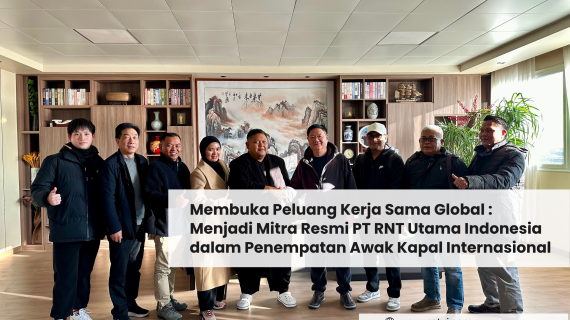
Expanding Global Partnership Opportunities: Collaborate with PT RNT Utama Indonesia for Professional Crew Placement

Expanding Global Partnership Opportunities: Collaborate with PT RNT Utama Indonesia for Professional Crew Placement

In the international maritime industry, the strength of a company is not solely determined by the number of applicants or marketing reach, but by the quality and sustainability of its global partnerships.

Reliable crew supply requires more than recruitment. It demands a structured system, consistent quality control, and strong collaboration between trusted partners across countries.

As a company specializing in international crew placement and management, PT RNT Utama Indonesia is opening opportunities for global agencies and maritime companies to establish long-term partnerships in providing qualified Indonesian crew for international vessels.

The Importance of Global Partnerships in Crew Supply

The maritime and fishing industries operate in a highly dynamic environment, where the demand for crew members can change rapidly depending on operational needs.

Shipowners and operators require partners who can:

  • Provide crew consistently and on time
  • Maintain high standards of recruitment and training
  • Ensure compliance with international regulations
  • Respond quickly to operational demands

Without a reliable partner, crew shortages can disrupt vessel operations and impact overall efficiency.

Through structured partnerships, both parties benefit from:

  • Stable and continuous crew supply
  • Improved operational reliability
  • Reduced recruitment risks
  • Long-term business growth

Why Partner with PT RNT Utama Indonesia?

As an experienced crewing company, PT RNT Utama Indonesia offers a professional and reliable system to support global maritime workforce needs.

1. Structured Recruitment System

All candidates go through a comprehensive selection process, including document verification, interviews, medical examinations, and competency assessments. This ensures that every crew member meets industry standards before deployment.

2. Qualified and Job-Ready Crew

The company prepares both experienced and non-experienced candidates through training and competency development programs, ensuring readiness for onboard operations.

3. Compliance with Regulations

All recruitment and deployment processes are conducted in accordance with national and international maritime regulations, ensuring legal and secure placement.

4. Efficient Crew Deployment

With an organized system and experienced team, PT RNT Utama Indonesia is capable of fulfilling crew requirements quickly without compromising quality.

Partnership Opportunities

PT RNT Utama Indonesia offers flexible collaboration models tailored to the needs of international agencies and maritime companies.

Partnership opportunities include:

  • Supplying crew for various vessel types
  • Providing candidates based on specific operational requirements
  • Long-term crew supply agreements
  • Support in administrative and recruitment processes

This allows partners to focus on vessel operations, while crew recruitment and preparation are handled professionally.

Partnership Standards and Commitment

Building a strong international partnership requires more than transactional cooperation. It requires trust, transparency, and long-term commitment.

PT RNT Utama Indonesia upholds key principles in every partnership:

  • Clear and transparent communication
  • Defined crew requirements and expectations
  • Consistent quality control
  • Responsibility for deployed crew

This approach ensures sustainable and mutually beneficial collaboration.

Supporting Business Growth Through Collaboration

As the demand for maritime labor continues to grow globally, strategic partnerships become essential for business expansion.

With access to a large pool of Indonesian maritime workers and a structured recruitment system, PT RNT Utama Indonesia is well-positioned to support international partners in scaling their operations.

A strong partnership network contributes to:

  • Stable workforce availability
  • Improved crew quality
  • Increased operational efficiency
  • Sustainable business growth

Long-Term Partnership Vision

PT RNT Utama Indonesia believes that successful partnerships are built on consistency, professionalism, and mutual trust.

With proven experience in international crew placement, the company is committed to delivering reliable services and maintaining high standards for every partner.

Partnership Invitation

For international agencies and maritime companies seeking a reliable crew supply partner, PT RNT Utama Indonesia welcomes collaboration opportunities.

Visit: www.rntui.com
Instagram: @rntutama.id

Partner with PT RNT Utama Indonesia and build a strong, reliable, and sustainable global crewing network.

How to Pass ABK Selection for Beginners: From Zero to Ready for International Vessel Deployment

How to Pass ABK Selection for Beginners: From Zero to Ready for International Vessel Deployment

Many people are interested in working as a ship crew member (ABK) because of the promising income and the opportunity to work abroad. However, many applicants fail during the selection process, even before they get the chance to be deployed.

The main issue is not a lack of motivation, but a lack of understanding of how the selection process works and what companies actually assess.

As a professional crew placement company, PT RNT Utama Indonesia emphasizes that successful candidates are not just those who are willing, but those who are prepared in terms of documents, skills, mental readiness, and work attitude.

This article explains in detail how to increase your chances of passing the selection, even if you have no prior experience.

Understanding the Real Selection Process

Before discussing tips, it is important to understand that ABK selection consists of multiple stages, each with different evaluation criteria.

Generally, the process includes:

  • Document verification
  • Initial interview
  • Medical check-up
  • Psychological assessment
  • Basic training (BST)
  • Competency test
  • Vessel placement

Many candidates fail not because they are incapable, but because they are not prepared for one of these stages.

1. Ensure Your Documents Are Accurate and Complete

One of the most common mistakes beginners make is treating documents as a mere formality. In reality, this is the first and most critical stage.

Common issues include:

  • Inconsistent names across documents
  • Incomplete documentation
  • Invalid or unclear data
  • Missing required documents such as police clearance

Professional companies like PT RNT Utama Indonesia apply strict document verification because these records are used for international processing.

Tip:
Make sure all your personal data is consistent and your documents are complete before applying.

2. Take the Interview Seriously

Many candidates attend interviews without preparation, assuming it is just a formality. This is a major mistake.

Interviews are used to evaluate:

  • attitude
  • communication skills
  • seriousness
  • mental readiness

Common assessment points include:

  • understanding of ABK responsibilities
  • readiness to work at sea for long periods
  • ability to follow rules

Practical tips:

  • Answer clearly and concisely
  • Avoid being overly casual
  • Show seriousness and commitment

3. Prepare Your Physical Condition Early

Working on a vessel is physically demanding. Many applicants fail the medical check-up due to poor physical condition.

Common issues include:

  • non-ideal body condition
  • health problems (lungs, heart, etc.)
  • medical history concerns
  • low stamina

Tip:
Start preparing your body before applying:

  • exercise regularly
  • get enough rest
  • avoid unhealthy habits

Physical readiness is essential, not optional.

4. Learn the Basics Even as a Beginner

Some beginners assume they do not need preparation because they will be trained later. This mindset is incorrect.

Companies prefer candidates who:

  • have basic understanding of the job
  • show initiative to learn
  • are not completely unfamiliar

At minimum, understand:

  • types of vessels (samba, longline, trawl)
  • basic crew responsibilities
  • working conditions at sea

5. Take the Competency Test Seriously

The competency test is one of the most critical stages. This is where your actual ability is evaluated.

Assessments include:

  • work execution
  • learning speed
  • accuracy
  • discipline

Common mistakes:

  • lack of focus
  • underestimating the test
  • ignoring instructions

Your performance here can determine whether you are selected or not.

6. Be Mentally Prepared

Working on a vessel means:

  • being away from family for months
  • handling physically demanding tasks
  • facing high work pressure
  • living outside your comfort zone

Companies will assess whether you are truly ready or just trying.

Tip:
Do not apply if you are:

  • unsure
  • mentally unprepared
  • influenced by others

7. Attitude Matters More Than Skill

Skills can be trained, but attitude is harder to change.

Shipping companies prioritize:

  • discipline
  • responsibility
  • teamwork
  • compliance with rules

Many candidates with strong skills fail due to poor attitude, while beginners with good attitude are often prioritized.

8. Choose a Legal and Professional Path

A common mistake is choosing unofficial channels for faster deployment.

Risks include:

  • unclear contracts
  • lack of protection
  • potential fraud
  • unsafe working conditions

Through professional companies like PT RNT Utama Indonesia, the process may be stricter, but it is:

  • safer
  • structured
  • more reliable for long-term career growth

9. Stay Consistent and Don’t Give Up

Not everyone passes on the first attempt, and that is normal.

What matters is:

  • learning from mistakes
  • improving weaknesses
  • trying again

Successful candidates are those who continue preparing and improving.

Conclusion

Passing ABK selection is not about luck, but about preparation. From documentation to physical readiness, mental strength, and attitude, every aspect plays a role.

For beginners, opportunities remain open as long as you are willing to learn and follow the correct process.

Through a structured selection system, PT RNT Utama Indonesia continues to support Indonesian workers in pursuing careers in the international maritime industry safely and professionally.

If you are serious about becoming an ABK, start preparing now. Because in the end, success belongs not to those who move fastest, but to those who are best prepared. 🌊⚡

Requirements to Become an International Ship Crew (ABK): The Importance of Competency Testing Before Deployment

Requirements to Become an International Ship Crew (ABK): The Importance of Competency Testing Before Deployment

The interest in working as a ship crew member (ABK) on international vessels continues to grow in Indonesia. Many people are attracted to this profession due to the higher income compared to land-based jobs, as well as the opportunity to gain international work experience. However, not all candidates fully understand that becoming an ABK requires meeting several important requirements.

Working on a ship is not just about going abroad and earning money. It demands physical endurance, mental readiness, and technical skills that meet global maritime standards. One of the most important requirements, often underestimated, is competency testing.

As a professional crew placement company, PT RNT Utama Indonesia emphasizes that competency testing is not merely a formality, but a critical step to ensure that candidates are truly prepared for the job.

General Requirements to Become an International Ship Crew (ABK)

Before discussing competency testing, it is important to understand the basic requirements for becoming an ABK. In general, candidates must have:

  • Valid identification documents (ID card, family card, etc.)
  • Seaman Book
  • Basic Safety Training (BST) certificate
  • Skill certificates according to position (deck, engine, cook, etc.)
  • Medical check-up clearance
  • Police clearance certificate (SKCK)

However, having complete documents alone is not enough. Many candidates meet administrative requirements but fail in real working conditions due to a lack of practical skills.

This is where competency testing becomes essential.

What is Crew Competency Testing?

Competency testing is a process used to evaluate the actual abilities of prospective crew members, including both technical skills and work readiness.

Unlike certificates that only prove participation, competency testing measures whether a candidate can perform tasks according to real shipboard standards.

For example:

  • Can the candidate perform deck duties properly?
  • Can they follow work instructions effectively?
  • Do they understand safety procedures in emergency situations?

Competency testing provides real answers to these questions.

Why is Competency Testing Important?

1. Increasingly Strict International Standards

International shipping companies do not rely solely on documents. They need crew members who are ready to work immediately.

Without competency testing, the chances of being accepted are significantly lower.

2. Reducing Work Errors on Board

Working on a ship involves high-risk conditions. Even small mistakes can lead to serious consequences.

Competency testing ensures that candidates:

  • understand their responsibilities
  • are aware of risks
  • can perform tasks according to procedures

3. Adding Value in the Selection Process

Candidates who have passed competency testing are considered more professional and job-ready.

This gives them an advantage during:

  • interviews
  • ship owner selection
  • position placement

4. Helping Faster Adaptation Onboard

Many crew members fail not because they are physically unfit, but because they are not mentally and technically prepared.

Through competency testing, candidates:

  • understand the work environment
  • adapt faster to pressure
  • learn how to work effectively in teams

What is Evaluated in Competency Testing?

Competency testing typically covers several important areas:

Technical Skills

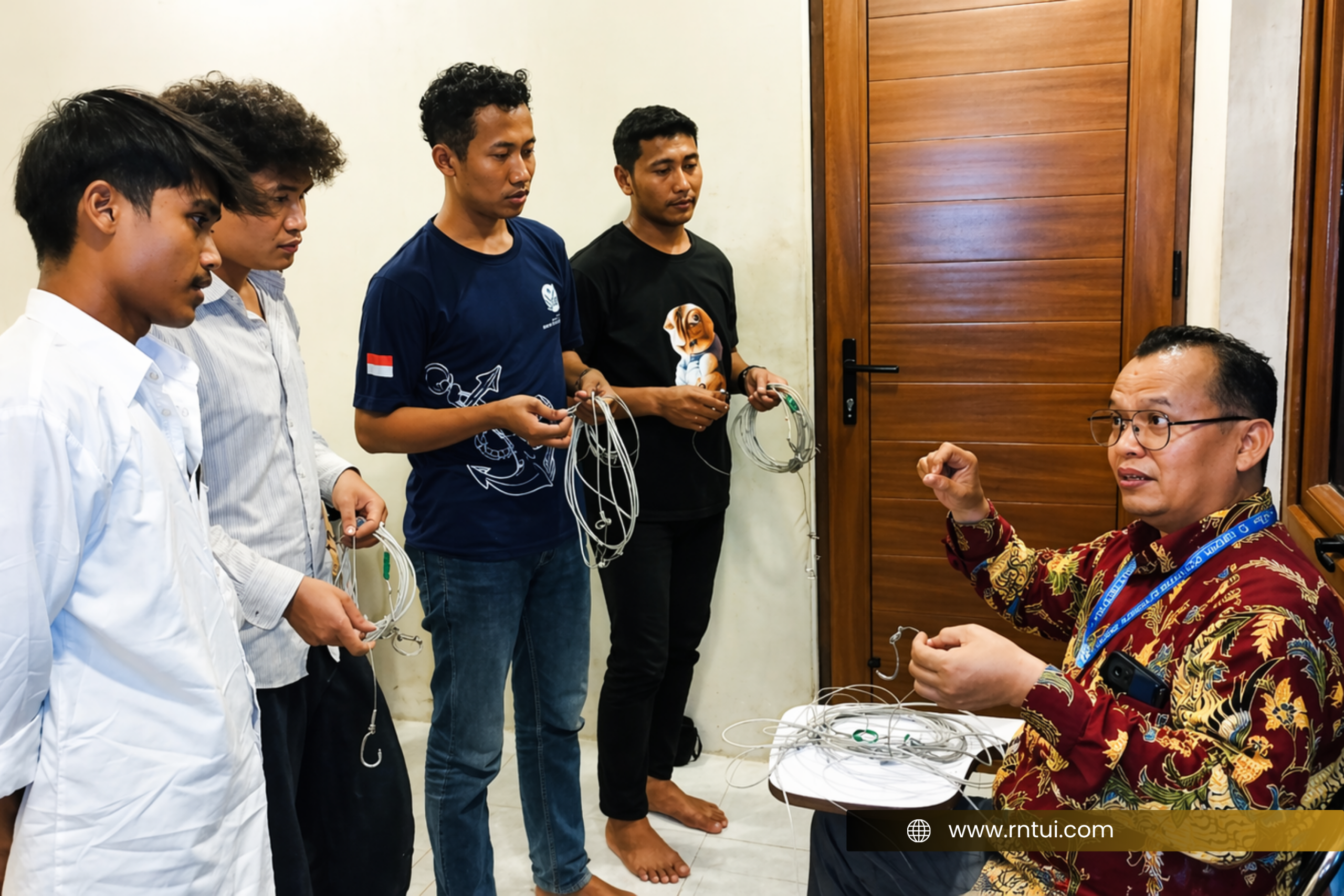
  • deck operations (rope handling, fishing equipment, etc.)
  • basic engine knowledge
  • position-specific skills

Work Procedures

  • workflow onboard
  • understanding instructions
  • proper use of equipment

Safety Awareness

  • use of safety equipment
  • emergency procedures
  • accident handling

Mental Readiness

  • discipline
  • responsibility
  • teamwork

Basic Communication

  • understanding instructions
  • coordination with crew members

Risks of Skipping Competency Testing

Some candidates are tempted to skip proper procedures for faster deployment. However, this can lead to serious risks:

  • inability to perform tasks properly
  • difficulty adapting onboard
  • increased risk of accidents
  • early termination of contract
  • loss of future job opportunities

In many cases, unprepared crew members face greater losses compared to those who follow proper processes.

The Role of Recruitment Companies in Ensuring Quality

Crew recruitment companies play a crucial role in ensuring the quality of workers they deploy.

PT RNT Utama Indonesia not only recruits candidates but also ensures they undergo proper training and competency evaluation.

Through partnerships with professional training institutions, the company helps candidates:

  • understand real shipboard work
  • improve their skills
  • prepare mentally

This approach results in better-prepared crew members who are trusted by international partners.

Competency Testing as a Career Investment

For aspiring ABK, competency testing is not just a requirement, but a long-term investment.

With strong skills, opportunities increase to:

  • secure better contracts
  • get promoted onboard
  • be rehired by shipping companies
  • earn higher income

A maritime career does not end with one contract. Skilled workers will always have more opportunities.

Conclusion

Becoming an international ship crew member offers great opportunities, but it also requires proper preparation. Beyond administrative requirements, candidates must ensure they possess the necessary skills.

Competency testing is a key step in ensuring readiness. It improves safety, work quality, and the chances of success in the maritime industry.

For those who aspire to become ABK, it is essential to follow the correct process through a professional company like PT RNT Utama Indonesia.

Because in the end, it is not those who leave the fastest who succeed, but those who are best prepared.

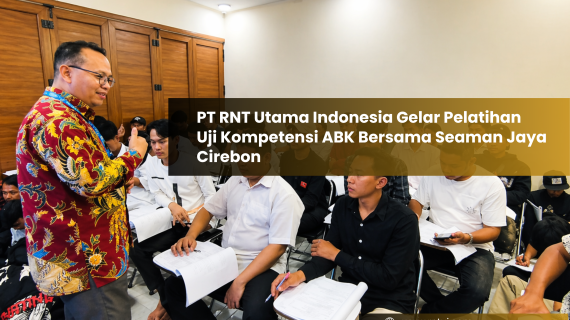
PT RNT Utama Indonesia Conducts Crew Competency Training in Collaboration with Seaman Jaya Cirebon

PT RNT Utama Indonesia Conducts Crew Competency Training in Collaboration with Seaman Jaya Cirebon

In the international maritime industry, the quality of human resources is a key factor that determines the success of vessel operations. It is not only about physical readiness, but also about having the technical competencies that meet global industry standards. Therefore, training and competency testing play a crucial role in preparing prospective crew members before deployment.

As a company engaged in crew placement and management, PT RNT Utama Indonesia continues to demonstrate its commitment to improving the quality of Indonesia’s maritime workforce. One of the concrete steps taken is conducting crew competency training in collaboration with Seaman Jaya Cirebon.

This initiative is part of the company’s effort to ensure that every crew member deployed is not only ready to work, but also equipped with the competencies required by international vessels.

Strategic Collaboration with Seaman Jaya Cirebon

In carrying out this training program, PT RNT Utama Indonesia collaborates with Seaman Jaya Cirebon as its training partner. Seaman Jaya is recognized as an institution with experience in maritime training and skill development.

This collaboration aims to provide a structured and standardized training system aligned with the needs of the global maritime industry. By involving a competent training institution, the competency assessment process can be conducted more professionally and objectively.

The partnership between a crew placement company and a training institution plays an important role in producing maritime professionals who are ready to compete at an international level.

The Importance of Competency Testing for Crew Members

Competency testing is a critical stage in the recruitment and placement process of crew members. Through this process, the technical abilities and work readiness of candidates can be evaluated before they are deployed to vessels.

In this training program, participants receive not only theoretical knowledge but also practical training relevant to real working conditions at sea. Key aspects evaluated during competency testing include:

  • Basic understanding of shipboard duties
  • Technical skills based on assigned positions
  • Work discipline and professional ethics
  • Mental readiness to handle work pressure
  • Awareness of safety procedures

Through competency testing, the company ensures that every crew member deployed meets the standards required by international shipping partners.

A Structured and Professional Training Process

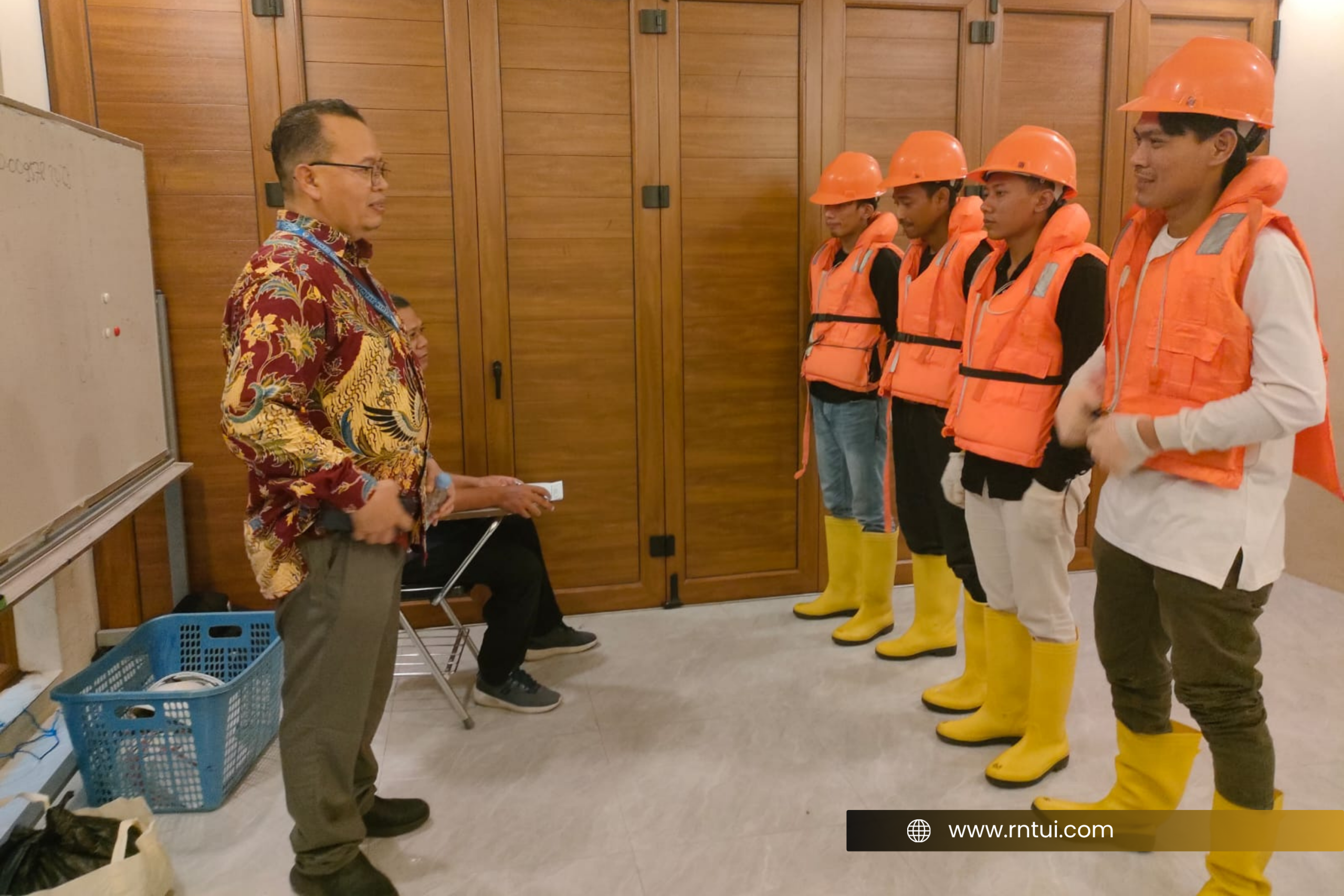
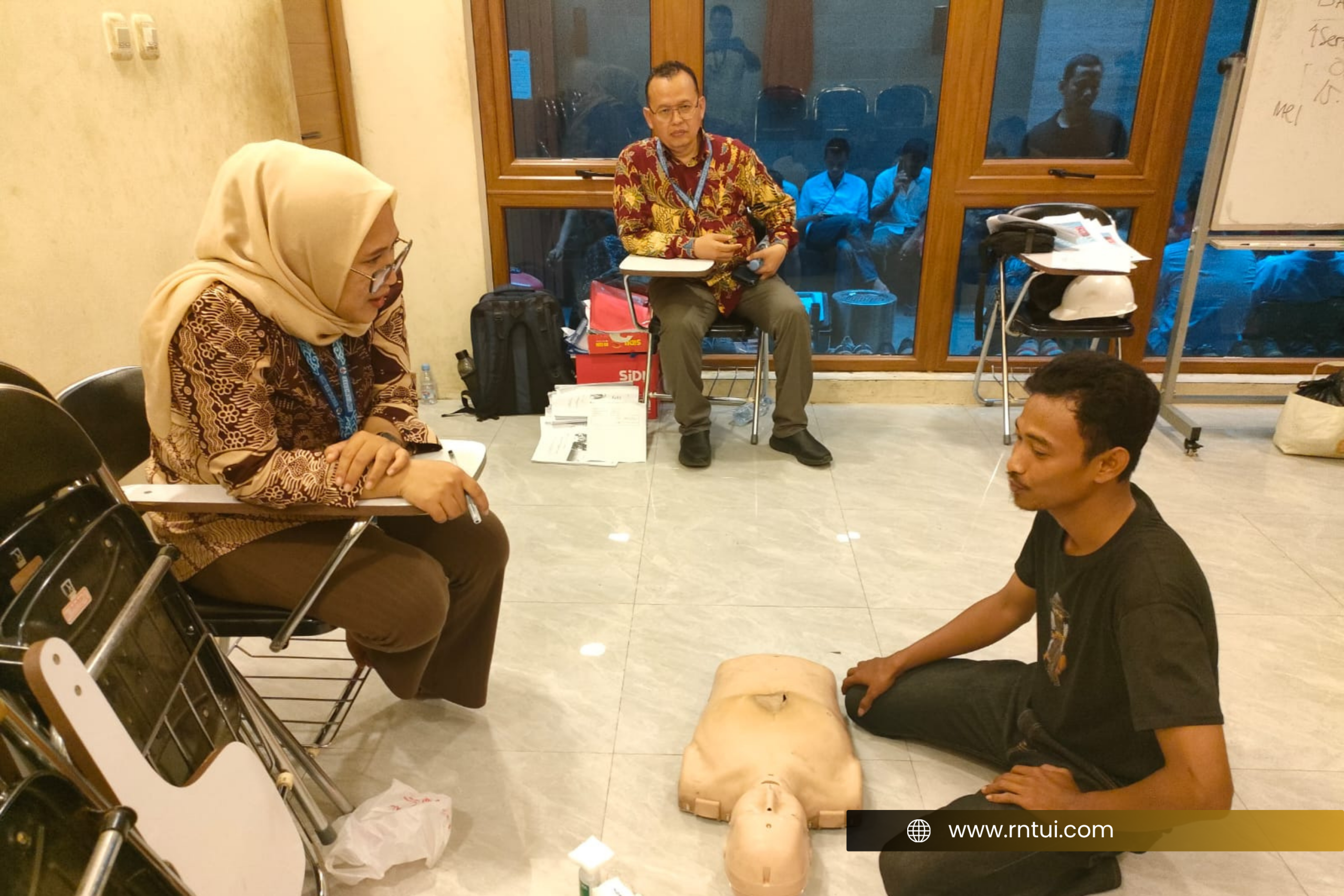
The competency training conducted is not merely a formality, but a carefully designed process using a systematic approach. Each participant goes through stages that include basic skill evaluation and work simulations that closely resemble real shipboard conditions.

Experienced instructors provide direct guidance to participants, helping them understand the expectations and standards of working in an international maritime environment.

In addition, participants are equipped with knowledge about teamwork, onboard communication, and discipline—essential elements for working effectively on a vessel.

Through this structured process, PT RNT Utama Indonesia ensures that its crew members are not only administratively qualified, but also technically and mentally prepared.

Enhancing the Competitiveness of Indonesian Maritime Workers

One of the main objectives of this training program is to enhance the competitiveness of Indonesian maritime workers in the global industry. Competition in this sector is intense, requiring workers to demonstrate high-quality skills and professionalism.

With competency training, crew members gain added value that makes them more prepared and more trusted by international partners. This also contributes to increasing the confidence of foreign vessel operators in Indonesian crew members.

This initiative helps maintain the reputation of Indonesian seafarers as skilled, disciplined, and professional workers in the global maritime industry.

PT RNT Utama Indonesia’s Commitment to Crew Quality

Through this training program, PT RNT Utama Indonesia emphasizes that its focus is not only on deploying crew members, but also on improving the overall quality of maritime human resources.

The company understands that successful crew placement is determined not only by numbers, but by the readiness and competence of each individual crew member.

Therefore, training and development programs are integral parts of the company’s strategy to produce high-quality and sustainable maritime professionals.

Positive Impact for Partners and Crew Members

The competency training program provides benefits for both crew members and international partners.

For crew members:

  • Improved practical skills
  • Increased confidence when working onboard
  • Added value in the recruitment process

For vessel operators:

  • Access to well-trained crew members
  • Reduced risk of operational errors
  • Improved efficiency in ship operations

This creates a mutually beneficial relationship between the workforce and industry partners.

Conclusion

The competency training program conducted by PT RNT Utama Indonesia in collaboration with Seaman Jaya Cirebon represents a concrete step toward improving the quality of Indonesia’s maritime workforce.

Through this collaboration, the company not only prepares crew members for employment but also equips them with competencies that meet international standards.

Going forward, programs like this are expected to continue growing, enabling more Indonesian workers to compete and build careers in the global maritime industry.

With a professional, structured, and sustainable approach, PT RNT Utama Indonesia remains committed to contributing to a stronger future for Indonesia’s maritime workforce.

Career Opportunities on Tanker Ships – Latest Seafarer Vacancies from PT RNT Utama Indonesia

Career Opportunities on Tanker Ships – Latest Seafarer Vacancies from PT RNT Utama Indonesia

The international shipping industry continues to grow and remains one of the sectors that offers many career opportunities for professional seafarers from Indonesia. One type of vessel that constantly requires experienced crew members is the tanker ship, which is designed to transport large quantities of liquid cargo such as crude oil and petroleum products.

Working on a tanker vessel can be a promising career path because tanker ships operate across global shipping routes and require skilled crew members with proper maritime training and experience.

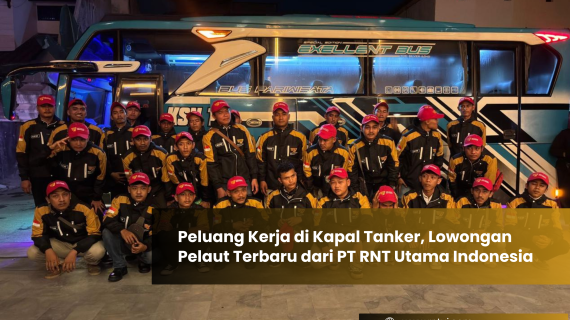
Currently, PT RNT Utama Indonesia is offering job opportunities for Indonesian seafarers to join tanker vessels with several crew positions available. These vacancies are open to seafarers who have complete maritime documents, relevant experience on similar vessel types, and are ready to work under international shipping contracts.

Understanding Tanker Ships

A tanker ship is a type of vessel specifically designed to transport liquid cargo in large quantities through sea routes. The main cargo carried by tanker ships usually includes crude oil, fuel products, and other petroleum-related liquids transported between countries.

There are several types of tanker vessels commonly used in the shipping industry, including:

Crude Oil Tanker
This type of tanker is used to transport crude oil directly from oil fields to refineries.

Product Tanker
Product tankers carry refined petroleum products such as diesel, gasoline, and jet fuel.

Chemical Tanker
Chemical tankers are designed to transport liquid chemicals and require more complex tank and piping systems.

Tanker ships operate under strict safety regulations because the cargo they carry can be flammable or hazardous. For this reason, tanker crew members must understand safety procedures and tanker operations very well.

Tanker Ship Job Vacancies at PT RNT Utama Indonesia

As a company specializing in crewing management and maritime recruitment, PT RNT Utama Indonesia regularly provides job opportunities for Indonesian seafarers to work on international vessels.

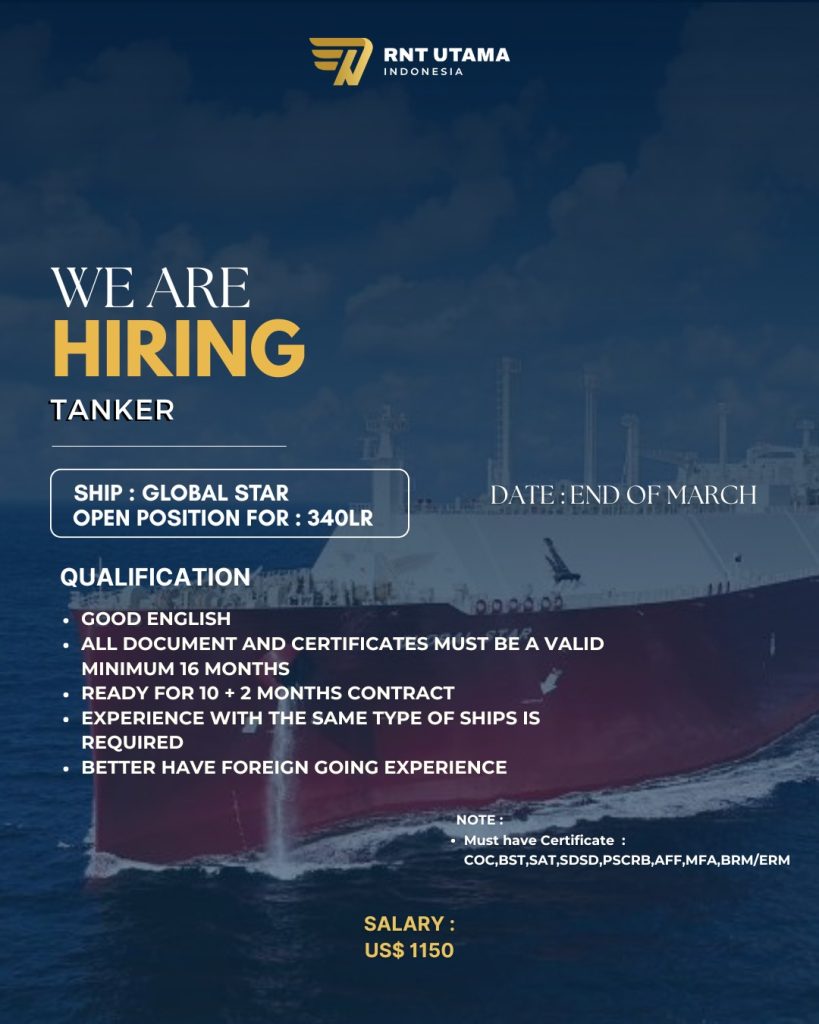
Currently, tanker ship vacancies are available with the following details:

Vessel: GLOBAL STAR

Joining date: End of March

Open position:

  • 340LR

Salary offered : US$ 1150

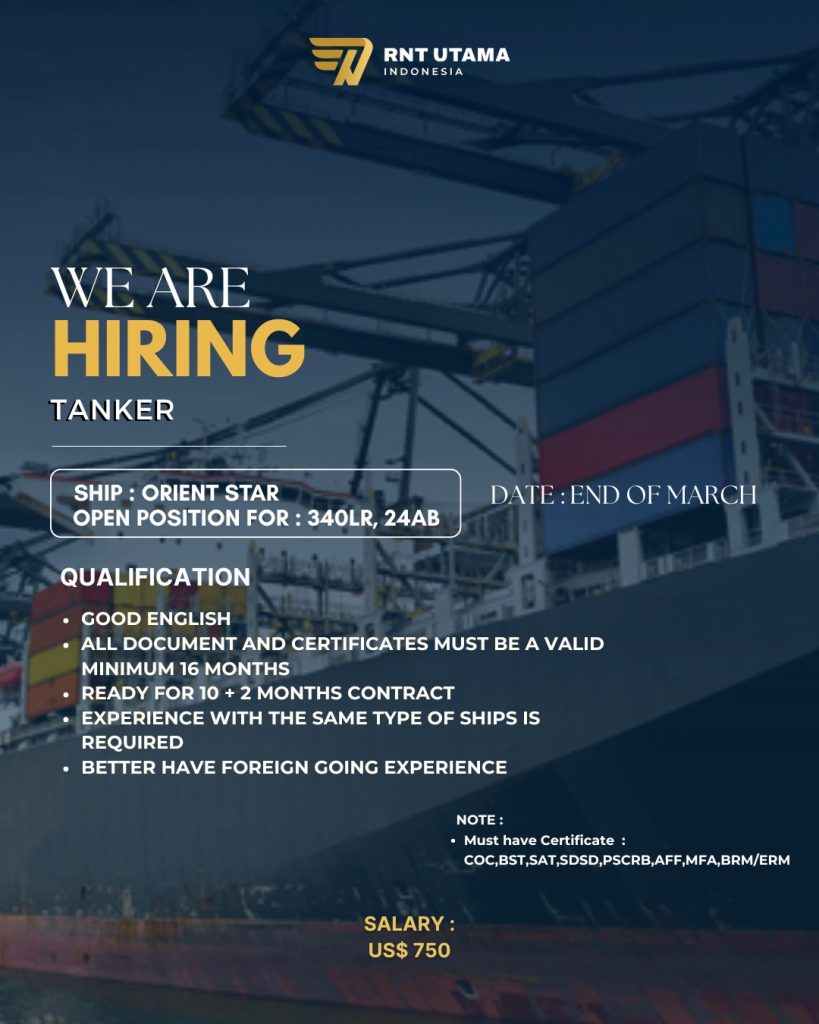
Vessel: ORIENT STAR

Joining date: End of March

Open positions:

  • 340LR
  • 24AB

Salary offered : US$ 750

These vacancies are open for seafarers who have experience working on tanker ships or vessels of the same type.

General Requirements for Seafarers

Seafarers who wish to apply for tanker ship positions through PT RNT Utama Indonesia must meet the following general requirements:

  • Good English communication skills
  • All seafarer documents and certificates must be valid for at least 16 months
  • Willing to work under a 10 + 2 months contract
  • Experience working on similar vessel types
  • Foreign-going experience is preferred

Applicants must also hold valid maritime safety certificates, including:

  • COC (Certificate of Competency)
  • BST (Basic Safety Training)
  • SAT
  • SDSD
  • PSCRB
  • AFF (Advanced Fire Fighting)
  • MFA (Medical First Aid)
  • BRM / ERM

Having complete documentation and relevant sea experience will significantly increase a seafarer’s chances of being selected for tanker ship positions.

Duties and Responsibilities of Tanker Ship Crew

Each crew member on a tanker vessel has different responsibilities depending on their department and position. Below is an overview of common duties for tanker ship crew members.

Able Seaman (AB)

An Able Seaman is part of the deck department and plays an important role in vessel operations. Typical duties include:

  • Standing navigation watch during voyages
  • Assisting with mooring and unmooring operations
  • Performing deck maintenance tasks
  • Supporting cargo loading and discharging operations
  • Maintaining safety and cleanliness on deck

Oiler / Motorman

Oilers or motormen work in the engine department and assist engineers in operating and maintaining the vessel’s machinery. Their duties include:

  • Assisting with the operation of the ship’s main engine
  • Monitoring machinery in the engine room
  • Performing routine maintenance on mechanical equipment
  • Assisting with repairs and troubleshooting of ship machinery

Deck Crew Responsibilities

Deck crew members are responsible for various deck operations, particularly those related to cargo handling and vessel maintenance, including:

  • Supporting cargo loading and discharging operations
  • Conducting safety inspections
  • Performing maintenance and painting work on the vessel
  • Ensuring safety equipment on deck is well maintained

Challenges of Working on Tanker Ships

Working on tanker vessels presents unique challenges compared to other types of ships. Tanker vessels carry liquid cargo that can be flammable or hazardous, which means crew members must always follow strict safety procedures.

Some common challenges faced by tanker ship crew include:

  • Risks related to oil or fuel cargo
  • Strict safety standards and regulations
  • Complex cargo handling systems
  • Demanding work schedules during long voyages

Despite these challenges, working on tanker ships offers valuable professional experience and excellent career opportunities for seafarers.

How to Apply for Tanker Ship Vacancies

Seafarers who are interested in applying for tanker ship positions through PT RNT Utama Indonesia should ensure that all maritime documents are complete and valid.

The general application process usually includes:

  1. Preparing a seafarer CV or resume
  2. Preparing all required maritime certificates
  3. Ensuring passport and seaman book are valid
  4. Submitting the application to the crewing company

More information about the latest seafarer job vacancies can be found on the official website of PT RNT Utama Indonesia.

Conclusion

Working on tanker vessels offers significant career opportunities for Indonesian seafarers who want to build a professional career in the international shipping industry. With the right experience and complete maritime documentation, seafarers have the opportunity to join international tanker fleets.

Through PT RNT Utama Indonesia, Indonesian seafarers can apply for several tanker ship positions currently available. Make sure all certificates and maritime documents are complete before applying so that the recruitment process can run smoothly.


Career Opportunities on General Cargo and Bulk Carrier Ships, Latest Seafarer Vacancies from PT RNT Utama Indonesia

Career Opportunities on General Cargo and Bulk Carrier Ships, Latest Seafarer Vacancies from PT RNT Utama Indonesia

The international shipping industry plays a vital role in global trade. Most goods traded between countries are transported through sea routes using various types of commercial vessels. Two of the most commonly used ships in maritime transportation are general cargo ships and bulk carrier vessels.

Both types of ships are essential in supporting global logistics and require professional seafarers with experience in maritime operations. For Indonesian seafarers, working on these vessels offers valuable opportunities to develop a career in the international shipping industry.

Currently, PT RNT Utama Indonesia is offering job opportunities for seafarers to join general cargo and bulk carrier vessels with several available positions. These vacancies are open to seafarers who have complete maritime documents, experience on similar vessel types, and are ready to work under international shipping contracts.

If you are a seafarer looking for new career opportunities, this is a great chance to join international vessels through PT RNT Utama Indonesia.

Understanding General Cargo Ships

A general cargo ship is a type of vessel designed to transport a wide variety of goods that are usually packaged or unitized. Unlike tanker ships that transport liquid cargo or bulk carriers that carry loose materials, general cargo vessels transport goods such as packaged items, pallets, or machinery.

Common cargo transported by general cargo ships includes:

  • Industrial machinery
  • Vehicles and heavy equipment
  • Manufactured products
  • Construction materials
  • Export and import packaged goods

General cargo vessels are typically equipped with onboard cranes that assist with loading and unloading cargo at ports. This allows the ship to operate even in ports that do not have complete cargo handling facilities.

Because they carry various types of cargo, crew members on general cargo ships must understand cargo securing techniques and safety procedures during transportation.

Understanding Bulk Carrier Ships

In contrast to general cargo ships, bulk carriers are vessels specifically designed to transport unpackaged bulk commodities in large quantities.

Typical bulk cargo transported by bulk carriers includes:

  • Coal
  • Iron ore
  • Grain
  • Cement
  • Fertilizer
  • Agricultural products

Bulk carriers have large cargo spaces called cargo holds, which allow them to transport thousands of tons of cargo in a single voyage.

Bulk carrier vessels play a major role in the global economy because they are widely used to transport raw materials needed for industrial production around the world.

Differences Between General Cargo Ships and Bulk Carriers

Although both ship types transport goods, they operate differently in terms of cargo handling.

General Cargo Ships

  • Transport packaged or unitized cargo
  • Carry a wide variety of goods
  • Usually equipped with cranes for loading and unloading
  • Flexible cargo handling operations

Bulk Carrier Ships

  • Transport loose bulk commodities
  • Usually carry a single type of cargo per voyage
  • Cargo is loaded using conveyor systems or grab cranes
  • Designed for transporting large volumes of raw materials

Understanding these differences is important for seafarers because each vessel type has its own operational procedures and safety standards.

General Cargo Ship Job Vacancy at PT RNT Utama Indonesia

As a crewing management and maritime recruitment company, PT RNT Utama Indonesia regularly provides job opportunities for Indonesian seafarers to work on international vessels.

Currently, a vacancy is available for a general cargo vessel with the following details:

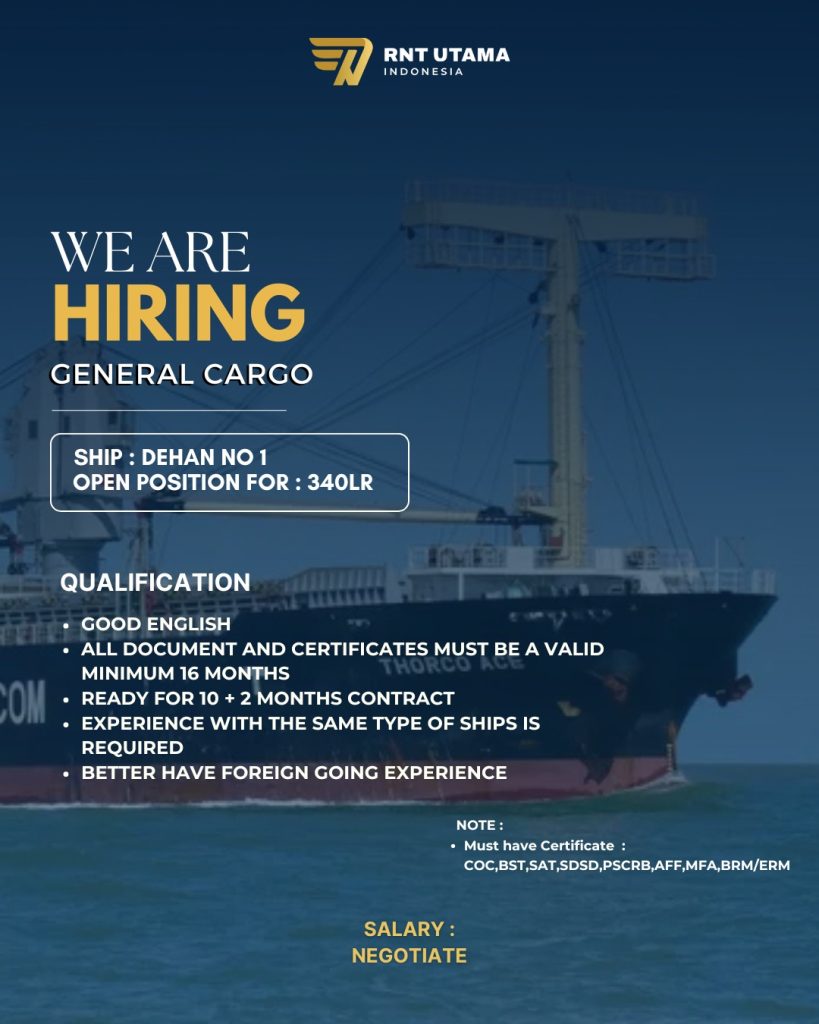
Vessel: DEHAN NO 1

Open Position:

  • 340LR

Salary:

Negotiable

Seafarers with experience on general cargo vessels or similar ships are encouraged to submit their applications.

Bulk Carrier Job Vacancy at PT RNT Utama Indonesia

In addition to general cargo vessels, PT RNT Utama Indonesia is also recruiting crew members for a bulk carrier vessel.

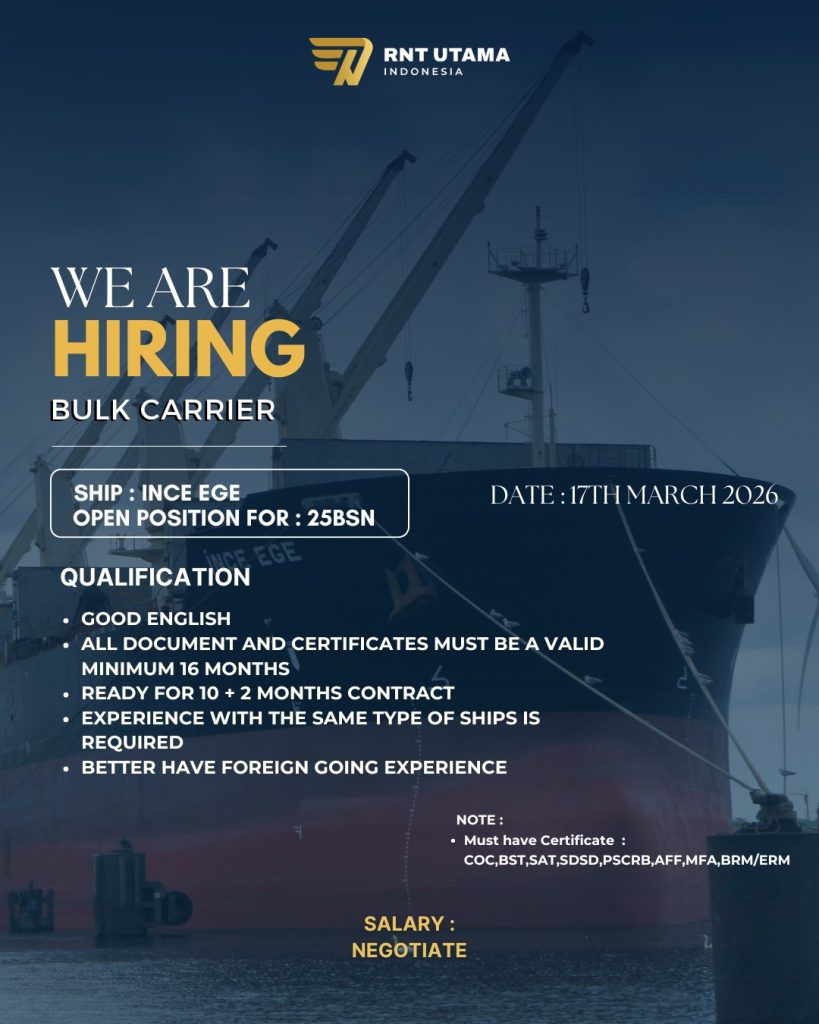
Vessel: INCE EGE

Joining Date : 17 March 2026

Open Position:

  • 25BSN (Bosun)

Salary : Negotiable

This position is suitable for experienced seafarers who have supervised deck crew operations on bulk carrier vessels.

General Requirements for Seafarers

Seafarers who wish to apply for positions through PT RNT Utama Indonesia must meet the following general requirements:

  • Good English communication skills
  • All seafarer documents and certificates must be valid for at least 16 months
  • Willing to work under a 10 + 2 months contract
  • Experience on similar vessel types
  • Foreign-going experience is preferred

Required maritime certificates include:

  • COC (Certificate of Competency)
  • BST (Basic Safety Training)
  • SAT
  • SDSD
  • PSCRB
  • AFF (Advanced Fire Fighting)
  • MFA (Medical First Aid)
  • BRM / ERM

Make sure all your maritime documents are valid before submitting your application.

Duties and Responsibilities of Cargo Ship Crew

Each crew member on a cargo vessel has different responsibilities depending on their department and position. On general cargo and bulk carrier ships, crew members typically work in the deck department and engine department.

Common responsibilities of cargo ship crew include:

  • Assisting with cargo loading and discharging operations
  • Performing routine vessel maintenance
  • Ensuring vessel safety during voyages
  • Standing navigation watch when required
  • Maintaining cleanliness and safety in working areas

For the Bosun position, the main responsibility is supervising deck crew operations and ensuring all deck work is performed safely and efficiently.

How to Apply for Ship Vacancies

Seafarers who are interested in joining vessels through PT RNT Utama Indonesia should ensure that all maritime documents are complete and valid before applying.

The application process generally includes:

  1. Preparing a seafarer CV or resume
  2. Preparing all required maritime certificates
  3. Ensuring passport and seaman book are valid
  4. Submitting application documents to the crewing company

For more information about the latest ship vacancies, visit the official website of PT RNT Utama Indonesia.

Join PT RNT Utama Indonesia

PT RNT Utama Indonesia continues to provide career opportunities for Indonesian seafarers who wish to work in the international shipping industry. With the right experience and complete documentation, seafarers have a strong chance to join international merchant vessels.

Submit your application today and start your career on international vessels with PT RNT Utama Indonesia.
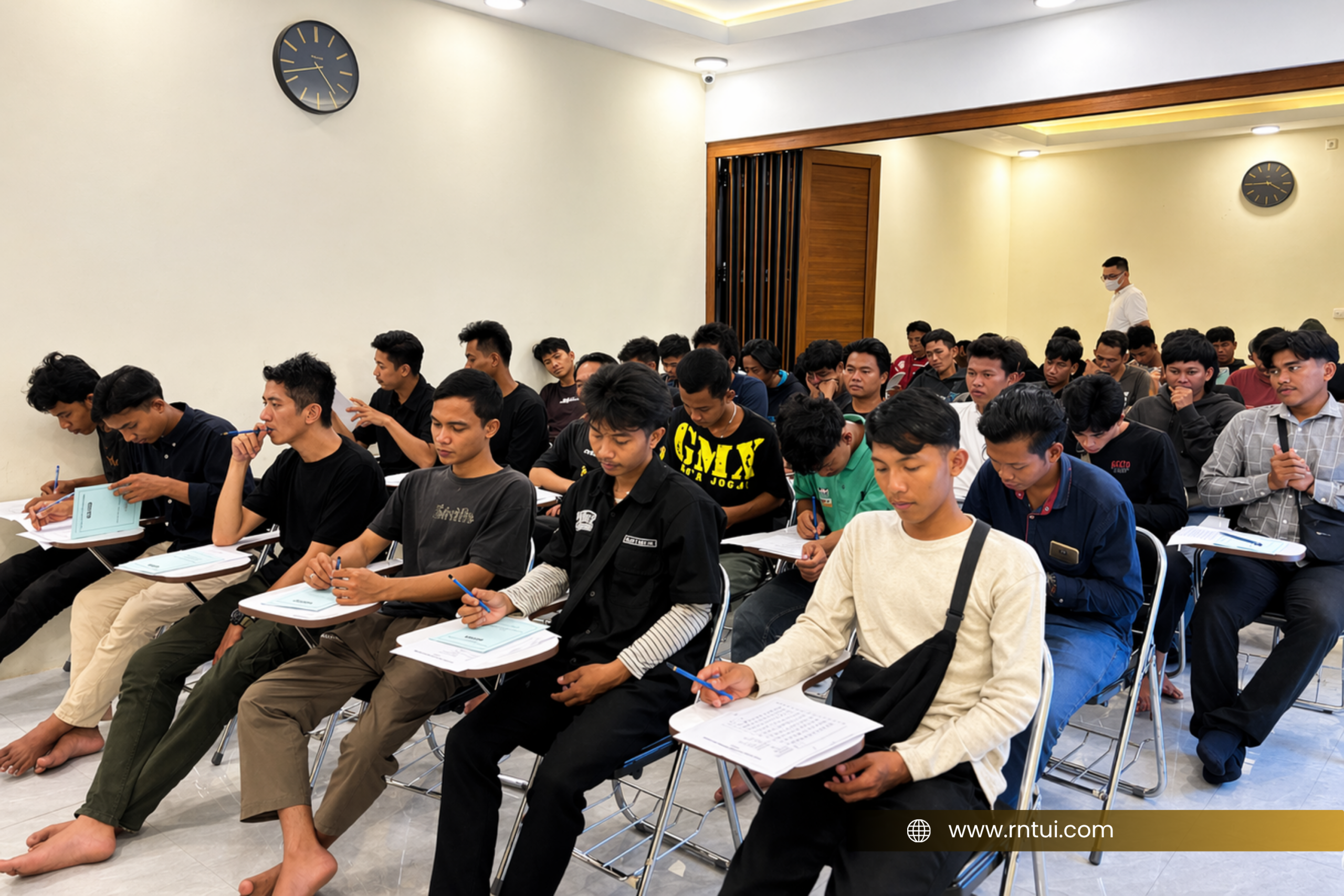
Latest Chemical Tanker Job Vacancies : Crew Positions, Duties, and Requirements

Latest Chemical Tanker Job Vacancies : Crew Positions, Duties, and Requirements

The international shipping industry continues to grow and provides great career opportunities for professional seafarers from Indonesia. One sector that consistently requires experienced crew members is chemical tanker vessels, which transport liquid cargo such as chemicals and oil products.

For seafarers who have experience working on tanker vessels, working on a chemical tanker can be a promising career choice because the demand for skilled crew members in this sector remains high.

Currently, PT RNT Utama Indonesia is opening job opportunities for several crew positions on chemical tanker vessels with joining schedules in the near future. These vacancies are open for qualified seafarers who have complete documents, relevant experience on similar vessels, and are ready to work on international shipping contracts.

Understanding Chemical Tanker Ships

A chemical tanker is a type of tanker vessel specifically designed to transport various types of liquid chemicals in large quantities. Unlike crude oil tankers, chemical tankers usually have more complex tank systems and are equipped with advanced safety systems to handle sensitive or hazardous cargo.

Cargo commonly transported by chemical tankers includes:

  • Methanol
  • Ethanol
  • Palm oil
  • Vegetable oil
  • Acid and other liquid chemicals
  • Petroleum products such as diesel or gasoline

Because chemical tankers carry different types of cargo, often hazardous, they require high safety standards. The piping systems, cargo pumps, and tanks on these vessels are more complex compared to standard tanker ships.

For this reason, crew members working on chemical tankers are generally expected to have experience on similar vessels and a strong understanding of safety procedures and chemical cargo handling.

Chemical Tanker Job Vacancies at RNT Utama Indonesia

As a crewing and ship management company, PT RNT Utama Indonesia regularly provides opportunities for Indonesian seafarers to work on international vessels.

Currently, job vacancies are available for chemical tanker vessels with the following details.

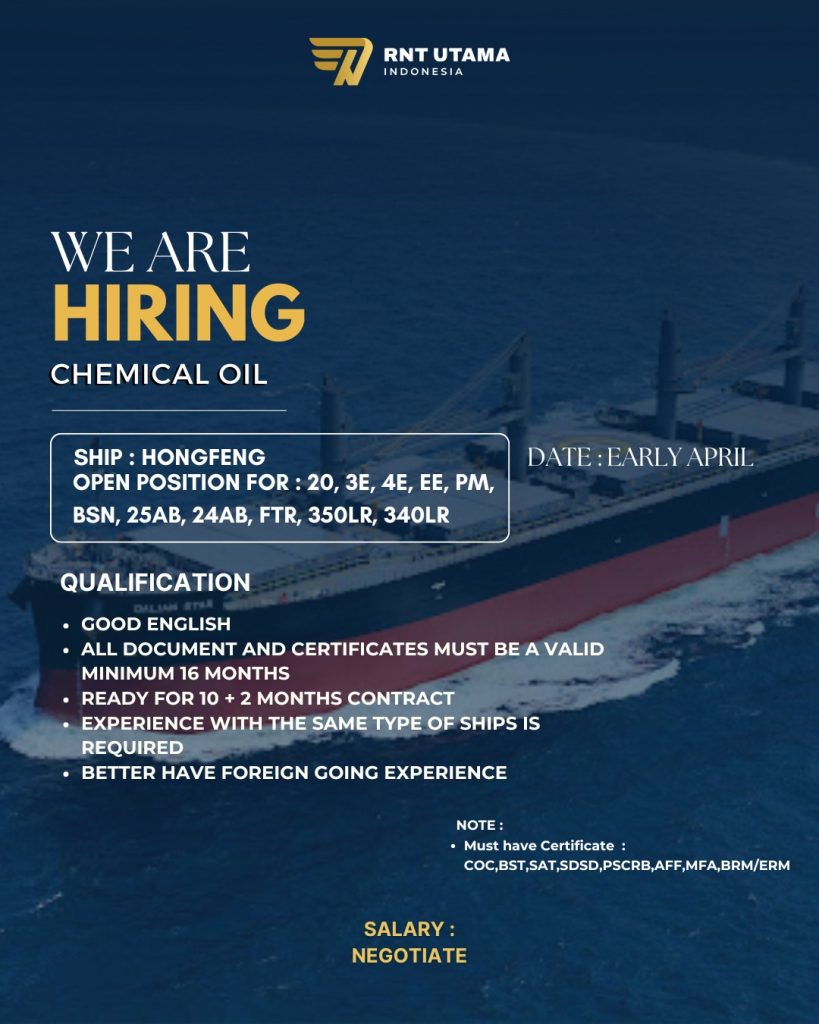
Vessel: HONGFENG

Joining schedule: Early April

Open positions:

  • 2O (Second Officer)
  • 3E (Third Engineer)
  • 4E (Fourth Engineer)
  • EE (Electrician)
  • PM (Pumpman)
  • BSN (Bosun)
  • AB (Able Seaman)
  • FTR (Fitter)
  • Oiler / Motorman

Salary for these positions is negotiable depending on experience and qualifications.

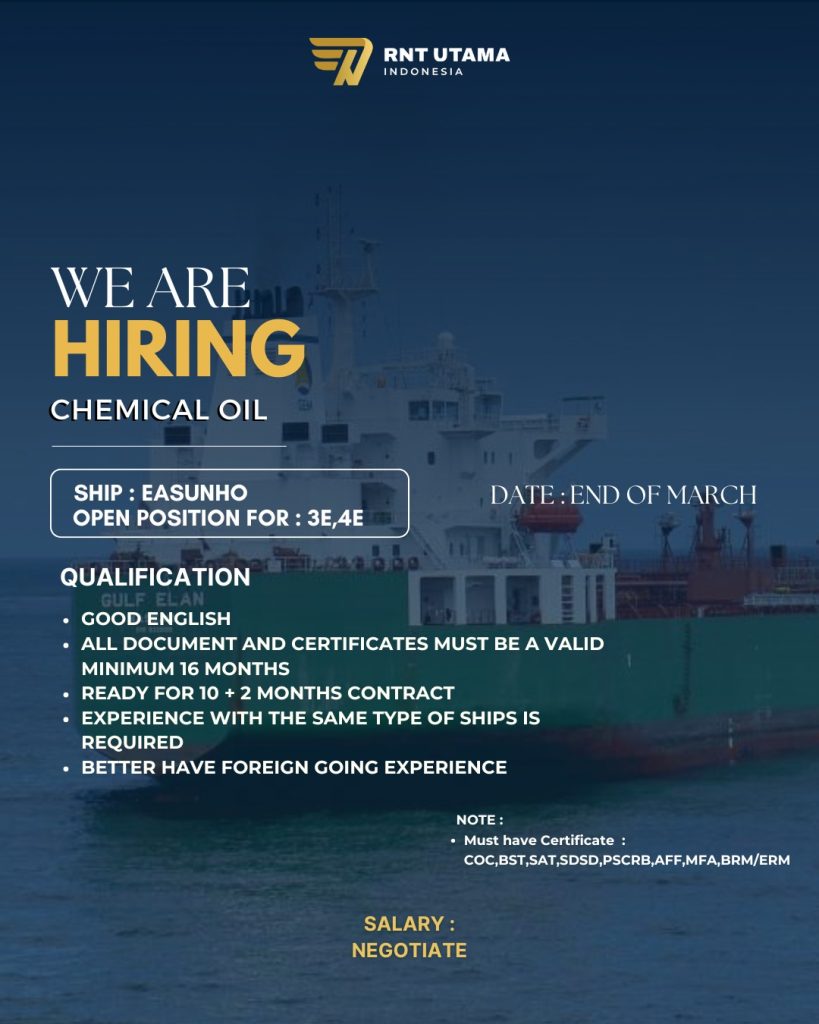
Vessel: EASUNHO

Joining schedule: End of March

Open positions:

  • 3E (Third Engineer)
  • 4E (Fourth Engineer)

These positions are open for seafarers with previous experience on tanker vessels or chemical tankers.

General Requirements for Seafarers

To apply for chemical tanker positions through PT RNT Utama Indonesia, applicants must meet the following requirements:

  • Good English communication skills
  • All seafarer documents must be valid for at least 16 months
  • Willing to sign a 10 + 2 months contract
  • Experience on similar type of vessels
  • Experience on foreign-going vessels is preferred

Applicants must also hold valid maritime safety certificates, including:

  • COC (Certificate of Competency)
  • BST (Basic Safety Training)
  • SAT
  • SDSD
  • PSCRB
  • AFF (Advanced Fire Fighting)
  • MFA (Medical First Aid)
  • BRM / ERM

Complete documentation and relevant experience will significantly increase the chances of being selected for tanker vessel positions.

Duties and Responsibilities of Crew on Chemical Tanker Vessels

Each crew position on a vessel has different responsibilities. Below is an overview of common duties for crew members working on chemical tanker ships.

Deck Department

The deck department is responsible for navigation and overall vessel operations. Main duties include:

  • Operating the vessel’s navigation systems during voyages
  • Handling mooring and unmooring operations at ports
  • Supervising cargo loading and discharging operations
  • Performing deck maintenance work
  • Ensuring operational safety onboard

Positions within the deck department include Captain, Chief Officer, Second Officer, Third Officer, Bosun, and Able Seaman.

Engine Department

The engine department is responsible for all mechanical systems onboard. Their main duties include:

  • Operating and maintaining the main engine
  • Monitoring the engine room systems
  • Performing maintenance on generators and machinery
  • Ensuring cargo pumps and mechanical systems function properly

Positions within the engine department include Chief Engineer, Second Engineer, Third Engineer, Fourth Engineer, and Oiler.

Electrician

The ship electrician is responsible for the vessel’s electrical systems, including:

  • Maintaining the ship’s electrical equipment
  • Repairing electrical systems in the engine room
  • Monitoring alarm systems and electronic navigation equipment
  • Supporting the electrical systems of cargo pumps

Fitter

The fitter is responsible for technical repair work such as:

  • Welding and metal structure repairs
  • Repairing cargo pipelines
  • Maintaining piping systems onboard

Fitters play an important role on tanker vessels because these ships have extensive piping systems used for cargo operations.

Challenges of Working on Chemical Tanker Ships

Working on a chemical tanker presents unique challenges compared to other vessel types. The chemical cargo carried by these ships can be hazardous, so crew members must strictly follow safety procedures at all times.

Some common challenges include:

  • Risks related to hazardous chemical cargo
  • Strict safety standards and regulations
  • Complex cargo handling systems
  • Demanding work schedules during voyages

However, with proper training and experience, working on chemical tanker vessels can provide valuable professional experience and career advancement for seafarers.

How to Apply for Chemical Tanker Jobs at RNT Utama Indonesia

Seafarers interested in applying for chemical tanker positions should ensure that all their maritime documents are complete and valid.

The general application process includes:

  1. Preparing a seafarer CV or resume
  2. Preparing all maritime certificates
  3. Ensuring passport and seaman book are valid
  4. Submitting the application through the crewing company

For more information about the latest seafarer job opportunities, applicants can visit the official website of PT RNT Utama Indonesia.
Conclusion

Working on chemical tanker vessels offers excellent career opportunities for Indonesian seafarers who want to work in the international shipping industry. With the right experience and complete documentation, seafarers can secure positions on international tanker vessels.

Through PT RNT Utama Indonesia, seafarers have the opportunity to join chemical tanker vessels in various crew positions. Make sure all maritime documents and certificates are complete to ensure a smooth application process.

Ramadan Moments: PT RNT Utama Indonesia Hosts Staff Iftar Gathering

Ramadan Moments: PT RNT Utama Indonesia Hosts Staff Iftar Gathering

The month of Ramadan is always a meaningful period for Muslims around the world. Beyond being a time to enhance worship and strengthen spiritual ties, Ramadan also offers an opportunity to foster social connections, both within families and at the workplace. The values of togetherness, care, and gratitude that arise during this holy month are often expressed through various activities that strengthen bonds between individuals.

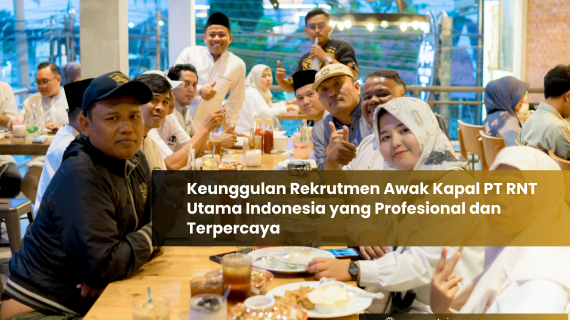
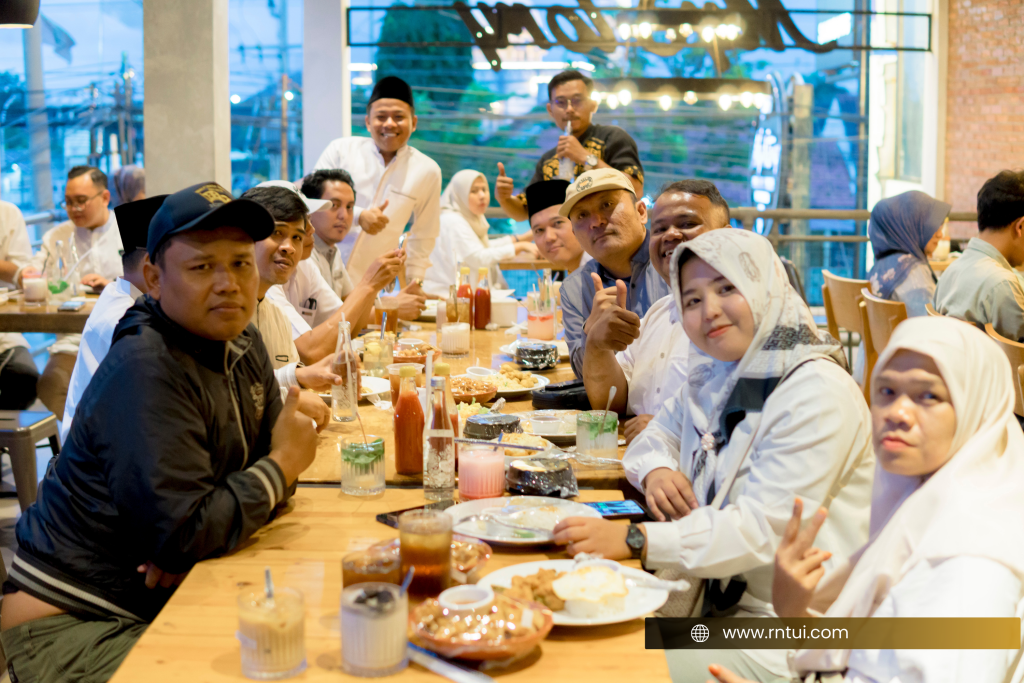
This spirit was also embodied by PT RNT Utama Indonesia through a staff iftar gathering held on March 6. The event became an important moment for the company to reinforce camaraderie, build warmer communication among employees, and create a sense of togetherness beyond daily work activities.

Iftar Together: More Than Just a Meal

The iftar gathering is not merely a shared meal during Ramadan but also serves as an opportunity to strengthen relationships among team members in a relaxed and familial atmosphere.

Warm Ambience at My Story Cafe Bistro & Social House, Tegal

The iftar took place at My Story Cafe Bistro & Social House, a venue known for its comfortable setting, ideal for group activities.

With its modern interior and cozy atmosphere, the place provided comfort for all staff attending. Participants were able to enjoy the togetherness in a relaxed setting while waiting for the time to break their fast.

Located in a strategic area of Tegal, the restaurant was easily accessible for the entire team, creating a closer and more intimate environment.

Before iftar, staff took the time to chat, share stories, and enjoy the warmth of Ramadan together. The interactions during the event were enjoyable, allowing employees to communicate more closely with colleagues from various departments.

Strengthening Staff Bonds

One of the main goals of the iftar gathering was to reinforce camaraderie among staff members. In daily work routines, individuals often focus on their own tasks and responsibilities. Events like this provide a valuable opportunity to build closer relationships within the team.

Throughout the event, the atmosphere was warm and familial. Staff could converse casually without work pressure, making communication feel natural and enjoyable.

When the call to Maghrib prayer sounded, everyone shared the iftar meal provided. This simple moment became truly meaningful as it was enjoyed together in a spirit of unity.

Prayers and Wishes for Seafarers

As a company engaged in international crew placement, the iftar gathering also served as a moment to pray for PT RNT Utama Indonesia’s seafarers working across the globe.

The PT RNT Utama Indonesia family hopes that all crew members are granted safety, health, and smooth operations at sea. Being a seafarer is a challenging profession, requiring them to work far from family and face various conditions in the middle of the ocean.

Through prayers offered during this blessed month of Ramadan, it is hoped that PT RNT Utama Indonesia’s crew members remain under God’s protection and return home safely.

Fostering a Positive Work Culture

For PT RNT Utama Indonesia, building strong relationships among employees is a crucial aspect of creating a healthy and productive work environment.

A harmonious workplace is not only shaped by effective systems but also by positive interpersonal relationships among team members. When employees feel comfortable and have good connections with colleagues, teamwork in accomplishing tasks becomes more effective.

Events like the iftar gathering are simple yet effective ways to strengthen these relationships.

Looking Forward to International Ship Agency Collaborations

Beyond strengthening internal relationships, Ramadan also serves as a time to reinforce the company’s vision for the future. PT RNT Utama Indonesia remains committed to providing skilled and professional Indonesian seafarers to the global maritime industry.

The company also hopes to continue building and expanding collaborations with international ship agencies from various countries. With more partnerships, opportunities for Indonesian seafarers will continue to grow.

This aligns with the company’s mission to contribute to enhancing human resources in the maritime sector while providing broader career opportunities for Indonesian seafarers.

Conclusion

The warm and meaningful iftar gathering is hoped to become a cherished tradition in the future. The togetherness built not only strengthens bonds among staff but also reinforces team spirit and solidarity.

The event concluded with a group photo session as a memento of this meaningful gathering. Through such simple yet impactful activities, the spirit of togetherness is expected to continue providing positive energy to all team members in carrying out their work.

logo RNT (4)

PT RNT Utama Indonesia

Head Office

(Fishing, Merchant, and Cruise Vessel)

@2025 Copyright PT RNT Utama Indonesia | Web Design by Lafasy Digital