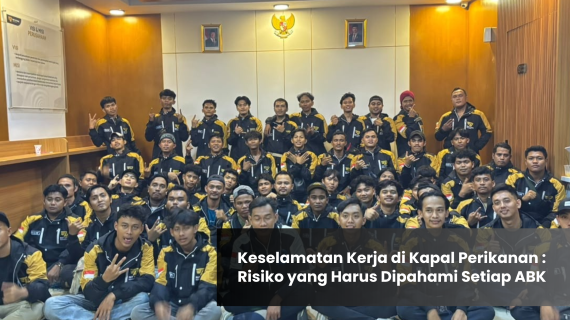
Therefore, crew safety at work must be a priority, from pre-departure preparation to daily duties on board. Understanding potential hazards and following safety procedures not only helps protect individual crew members but also contributes to the safety of the entire crew.
PT RNT Utama Indonesia encourages prospective crew members to prepare themselves by understanding the maritime working environment, maintaining discipline, and applying fishing vessel safety principles in every activity.
1. Accident Risks on the Vessel’s Deck
The deck is one of the working areas with a relatively high risk of accidents, particularly during fishing operations. Deck surfaces can become slippery because of seawater, fish, bait residue, or oil. These conditions increase the risk of slipping, tripping, and falling.
In addition, vessel movements caused by waves can make crew members lose their balance, especially when carrying equipment or handling catches.
To reduce these risks, crew members should wear appropriate footwear, keep working areas tidy, pay attention to deck conditions, and hold on to safe parts of the vessel when moving around. Crew members should also avoid running on deck and never walk through hazardous areas without checking their surroundings.
2. Bad Weather and Changing Sea Conditions
Bad weather is one of the main challenges of working on fishing vessels. High waves, strong winds, heavy rain, and limited visibility can increase the risk of accidents during vessel operations.
Under these conditions, vessel movements become more difficult to predict. Crew members may lose their balance, collide with nearby objects, or suffer injuries while performing their duties on deck.
Every crew member must pay attention to instructions from the captain and officers, follow applicable safety procedures, and use the appropriate protective equipment. If working conditions become dangerous, crew members should report the situation immediately to their supervisors and follow the operational decisions made by the responsible personnel.
Safety must always be a primary consideration in every activity, particularly when sea conditions change rapidly.
3. Hazards from Moving Equipment and Vessel Machinery
Fishing vessels use various types of equipment to support fishing operations, including winches, hauling lines, nets, pulleys, and other machinery. These can cause serious injuries if operated without adequate knowledge and caution.
Lines under tension can suddenly tighten or move, while nets and moving machine components can trap hands or other body parts. Loose clothing and certain accessories may also become entangled in equipment.
Crew members must understand the functions of the equipment they are responsible for, follow the operator’s instructions, and never touch moving machinery without proper authorization. Never stand in the path of a hauling line or in an area where swinging equipment could cause injury.
If any equipment is damaged or an unsafe condition is identified, report it immediately to the authorized personnel. Never attempt to repair machinery without the necessary permission and training.
4. The Importance of Using Personal Protective Equipment (PPE)
Personal Protective Equipment (PPE) is an essential part of crew safety on fishing vessels. The equipment used must be appropriate for the task, working environment, and vessel safety requirements.
Common examples include:
- Slip-resistant safety footwear: Helps reduce slipping risks and protects the feet.
- Work gloves: Protect the hands when handling ropes, nets, or catches, depending on the task.
- Safety helmets: Help protect the head from impacts or falling objects in areas where helmets are required.
- Life jackets: Must be used according to safety procedures, particularly when there is a risk of falling overboard or during emergencies.
- Eye and hearing protection: Required when working with hazardous splashes, particles, or excessive noise.
PPE should be inspected before use. However, it is important to remember that PPE does not replace safe working procedures. Crew members must still follow instructions, identify hazards, and maintain a safe distance from potential sources of danger.
5. Understanding Emergency Procedures on Board
Every crew member needs to know what to do during emergencies, such as fires, man-overboard incidents, flooding, or other situations that threaten the vessel’s safety.
Before starting work, learn the evacuation routes, locations of fire extinguishers, muster stations, safety equipment, and alarm signals used on board. Participate in safety drills and understand the responsibilities assigned to each crew member during an emergency.
When an emergency occurs, remain calm, report the incident immediately, and follow instructions from the captain or the personnel in charge. Do not take actions beyond your abilities or training, as doing so could endanger yourself and others.
Understanding emergency procedures in advance helps crew members respond to dangerous situations more quickly and effectively.
6. Work Habits That Promote Safety
Fishing vessel safety depends not only on equipment but also on everyday work habits. Discipline, communication, and awareness of the surrounding environment are essential to preventing accidents.
Every crew member should develop the following habits:
- Understand work instructions before starting a task.
- Keep work areas clean and organized.
- Report hazards, equipment damage, and near-miss incidents.
- Avoid joking around or becoming distracted while performing hazardous tasks.
- Maintain physical fitness, rest according to the schedule, and report fatigue that could affect safety.
- Never work under the influence of alcohol or substances that impair the ability to work safely.
- Communicate clearly and cooperate with other crew members.
Safety is a shared responsibility. If you see a fellow crew member engaging in unsafe behavior, provide an appropriate warning and follow the vessel’s reporting procedures.
Prepare Yourself Before Working on a Fishing Vessel
Understanding crew safety is essential for anyone who wants to build a career on an international fishing vessel. Knowledge of deck hazards, bad weather, moving equipment, PPE, emergency procedures, and workplace discipline helps prospective crew members understand their responsibilities in the maritime environment.
PT RNT Utama Indonesia supports prospective crew members through recruitment activities, document coordination, and briefings according to placement requirements. Candidates must still meet the job requirements, complete any required training, and understand the safety regulations applicable to their intended vessel and position.
Want to prepare for a career on an international fishing vessel? Follow the official recruitment information from PT RNT Utama Indonesia and make sure your qualifications are ready. Make safety a priority so you can work responsibly, professionally, and with discipline on board.