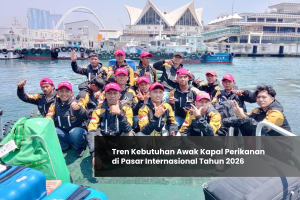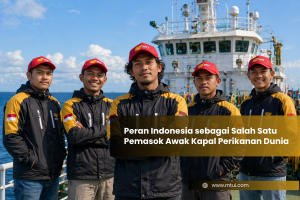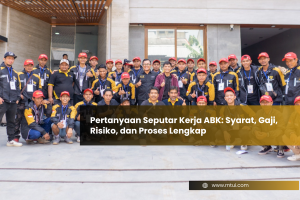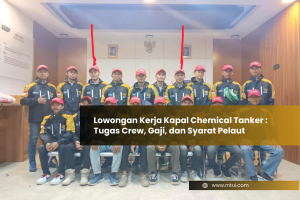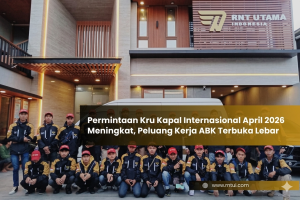
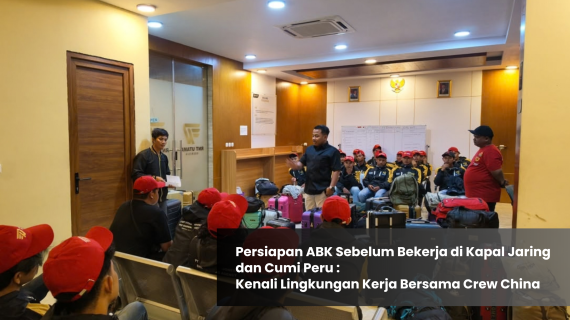
Working as a crew member on an international fishing vessel requires more than physical strength. Before departure, Indonesian crew members need to understand the type of vessel, the nature of the job, the working environment, and how to communicate and work with crew members from different countries.
This is particularly important for Indonesian crew members who have the opportunity to work on Peru net fishing vessels and squid fishing vessels, especially vessels operated by or associated with Chinese companies and crews. PT RNT Utama Indonesia has also facilitated opportunities for Indonesian crew members to work on international fishing vessels, including vessels operating in the Peru squid fishing area.
Therefore, preparation before departure should not be limited to packing luggage and checking documents. Physical fitness, mental readiness, communication skills, discipline, and the ability to adapt to an international working environment are equally important.
What Is a Peru Squid Fishing Vessel?
A Peru squid fishing vessel refers to a fishing vessel operating in the waters of the Pacific Ocean near Peru, South America, to catch squid.
The term “Peru squid fishing vessel” does not necessarily mean that the vessel is owned by Peru. In the distant-water fishing industry, vessels from other countries may operate in the region. Some squid fishing vessels operating in this area are associated with or operated by companies from countries such as China.
For Indonesian workers, understanding this distinction is important. The fishing area, vessel ownership, flag state, and nationality of the crew are not necessarily the same.
An ABK (Anak Buah Kapal), or crew member, is a worker who performs operational, maintenance, and safety-related duties onboard according to their position and the vessel’s chain of command.
Understanding the type of vessel and working environment before departure can help Indonesian crew members prepare more realistically for their international assignments.
Understanding the Working Environment on Peru Net Fishing and Squid Vessels
Net fishing vessels and squid fishing vessels have operational activities that require physical stamina, coordination, discipline, and teamwork.
On squid fishing vessels, for example, fishing activities can become particularly intensive when conditions are favorable. PT RNT Utama Indonesia has explained that squid fishing operations may involve the use of high-intensity lights and fishing activities that take place at night, requiring crew members to maintain good stamina and readiness.
This means that working on an international fishing vessel may have a very different rhythm from working on land.
The International Labour Organization (ILO), a specialized agency of the United Nations focusing on labor and employment issues, has highlighted challenges faced by migrant workers in the fishing sector, including long working hours, occupational risks, and issues related to wages and working conditions.
However, actual working conditions can vary depending on the vessel, company, employment contract, type of work, fishing season, and operational circumstances.
For prospective crew members, understanding these realities is important before accepting an international fishing assignment.
Working with Chinese Crew: What Should Indonesian Crew Members Understand?
For Indonesian crew members who are working for the first time on vessels associated with Chinese operators or alongside Chinese crew members, differences in language and working habits may become part of the adaptation process.
One of the first things to understand is the importance of the chain of command onboard.
Crew members are expected to receive instructions from their supervisors according to the vessel’s organizational structure and carry out their duties based on applicable procedures.
Being professional does not simply mean following every instruction without understanding it. It means being able to listen carefully, make sure the instruction is understood, and ask questions when something is unclear.
Do Not Pretend to Understand an Unclear Instruction
Language differences can sometimes make communication challenging.
For example, an Indonesian crew member may receive an instruction in a language they do not fully understand. In this situation, simply nodding because they are afraid of appearing confused can create unnecessary risks.
A better approach is:
Listen → Understand → Confirm → Act.
This is particularly important when instructions involve equipment, fishing operations, safety procedures, or activities that require coordination between several crew members.
Basic communication skills, willingness to learn, and an open attitude can make the adaptation process much easier.
Is the Chinese Working Culture Different from European Vessels?
Every vessel and company may have its own working system. Therefore, it would not be accurate to assume that all Chinese vessels have the same working culture, just as European vessels cannot be treated as having one uniform working culture.
What matters more for prospective crew members is understanding that communication styles, work structures, operational rhythms, and crew habits can differ from what they have experienced before.
An Indonesian crew member who previously worked with Indonesian or European crews may encounter different communication patterns when working with Chinese crew members.
Rather than focusing on which working culture is more disciplined or better, crew members should prepare themselves to:
- follow vessel regulations;
- understand the chain of command;
- respect cultural differences;
- communicate professionally;
- maintain punctuality and discipline;
- complete assigned responsibilities;
- and adapt to a new working environment.
The ability to adapt is an important skill for anyone working in an international maritime environment.
Physical Fitness Is Essential
Fishing vessels require crew members who are physically prepared for the demands of life and work at sea.
Maritime activities can require significant physical effort and stamina, particularly when fishing operations become intensive.
Before departure, prospective crew members should therefore prepare their physical condition by:
- maintaining a healthy sleep schedule;
- exercising regularly;
- maintaining a balanced diet;
- participating in physical training provided during preparation;
- and ensuring that they meet the required health standards for the position.
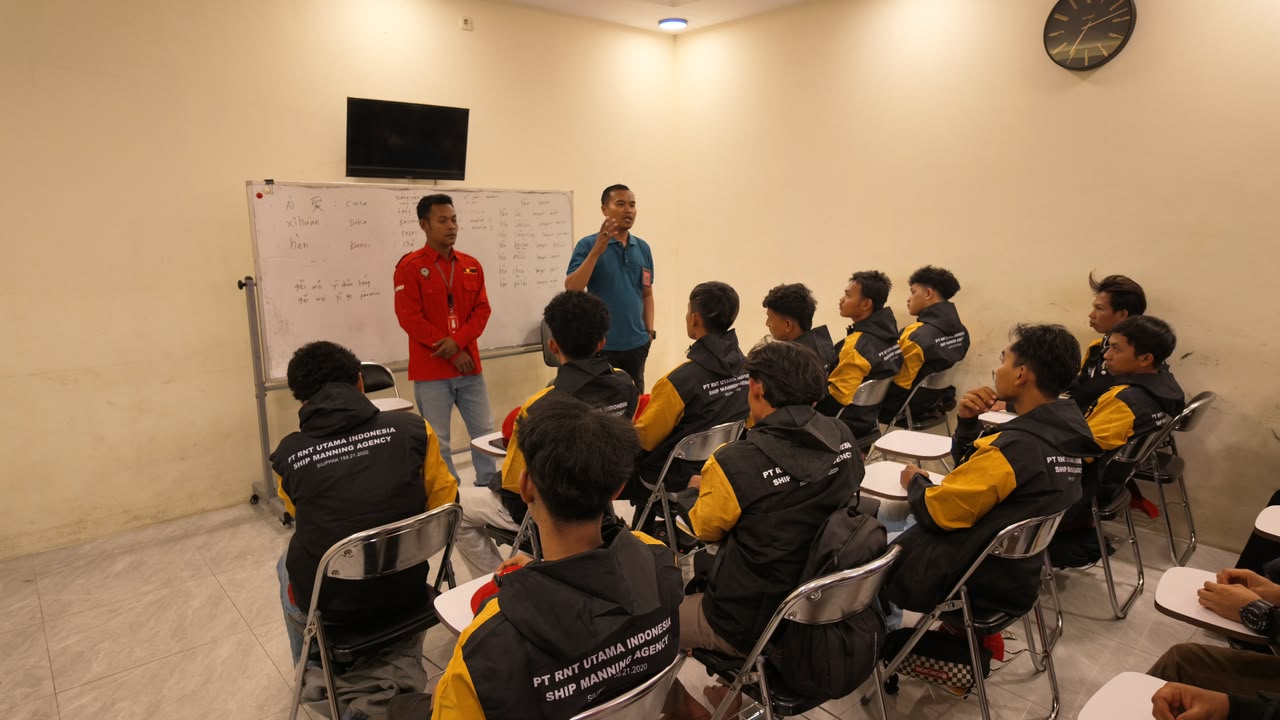
PT RNT Utama Indonesia also provides preparation and physical training activities for prospective crew members as part of their readiness before working onboard international vessels.
Mental Readiness Matters Too
Physical fitness alone is not enough.
Working on a Peru squid fishing vessel or net fishing vessel means spending an extended period away from family and living and working closely with other crew members during the contract period.
Prospective crew members need to be mentally prepared to:
be away from family, adapt to a new environment, work as part of a team, receive instructions, handle workplace challenges professionally, and remain focused throughout the contract.
Do not depart with the assumption that working on a fishing vessel is simply about earning an income.
Understand the responsibilities, working conditions, employment contract, and working environment before starting the assignment.
Don’t Forget Your Documents and Personal Belongings
Practical preparation is equally important.
Before departure, make sure all required documents and personal necessities have been prepared according to the placement requirements, including:
- travel documents;
- seafarer documents and required certificates;
- medical documents;
- personal clothing;
- toiletries;
- necessary personal medication;
- and other items recommended by the relevant parties.
Avoid bringing excessive belongings. Prioritize items that are genuinely needed during your time onboard.
Why Pre-Departure Briefing Matters
One of the most important stages before departure is the pre-departure briefing.
Through the briefing, prospective crew members can receive information about their work assignment, journey, working environment, documents, vessel regulations, and other important matters they need to understand before joining the vessel.
For PT RNT Utama Indonesia, crew placement is not simply about sending workers overseas. The process involves recruitment, selection, administrative preparation, training, briefing, coordination, and deployment according to the requirements of international partners.
This preparation helps ensure that crew members do not leave for an international assignment without understanding the work environment they are about to enter.
Working on an International Fishing Vessel Requires Professionalism
Ultimately, working on a Peru net fishing vessel or squid fishing vessel alongside Chinese crew members requires more than physical strength.
Indonesian crew members need physical fitness, mental readiness, discipline, communication skills, teamwork, and adaptability.
Cultural differences should not automatically be viewed as something negative or intimidating. Instead, they can become part of the experience of developing professional skills and gaining international maritime work experience.
The most important things are to understand the job beforehand, know the rights and responsibilities stated in the employment contract, follow safety procedures, and use a legitimate recruitment and placement process.
Ready to Prepare for an International Maritime Career?
If you are interested in working as an ABK on a net fishing vessel, Peru squid fishing vessel, or other international fishing vessel, start preparing yourself today.
Complete your documents, maintain your physical fitness, strengthen your mental readiness, learn about the working environment, and take every pre-departure briefing seriously.
PT RNT Utama Indonesia continues to provide international maritime employment opportunities for Indonesian crew members, including opportunities involving fishing vessels operating in China and international fishing areas.
Follow the latest ABK recruitment opportunities from PT RNT Utama Indonesia, register through the official recruitment process, and prepare yourself for your next opportunity to work onboard an international fishing vessel.
Because becoming a professional crew member is not only about being ready to depart—it is about being ready to work, communicate, and adapt once you are at sea.