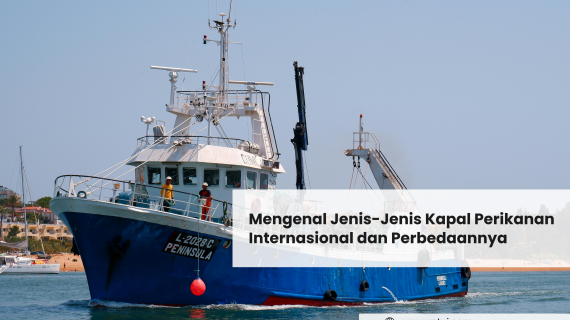
The international fishing industry operates with various types of vessels, each designed for specific fishing methods and operational systems. Because of these differences, the responsibilities of ship crew members (ABK), working environments, and equipment used on each vessel can vary significantly.
For prospective crew members who want to work on international vessels, understanding the different types of fishing vessels is very important. By learning these differences, workers can better understand the work environment, daily responsibilities, and skills required before joining the maritime industry.
As a company specializing in international crew placement, PT RNT Utama Indonesia continues to help Indonesian workers understand the international maritime industry, including the various vessel types commonly used in global fishing operations.
Below are several types of vessels frequently used in the international fishing industry and their key differences.
1. Squid Vessel
A squid vessel is specifically designed for catching squid in offshore waters.
These vessels usually operate at night because the fishing process uses powerful lights to attract squid closer to the vessel.
Characteristics of Squid Vessels
- Use high-intensity lighting systems
- Primarily operate during nighttime
- Focus on squid fishing operations
- Require crew members with strong stamina
Work System
Crew members on squid vessels are typically responsible for:
- operating fishing equipment
- handling catches
- cleaning work areas
- sorting seafood products
Work on squid vessels can be physically demanding, especially during peak fishing seasons.
2. Samba Vessel
Samba vessels are also related to squid fishing operations, but they generally involve different operational systems and larger-scale activities compared to regular squid vessels.
In the international fishing industry, samba vessels are known for having intensive work activities that require strong teamwork and coordination.
Characteristics of Samba Vessels
- Focus on large-scale squid fishing operations
- Continuous operational activities
- Require strong teamwork
- High-intensity working environment
Work Challenges
Crew members on samba vessels must have:
- strong physical endurance
- adaptability
- high work discipline
because vessel operations often continue for long periods at sea.
3. Trawl Vessel
A trawl vessel uses large fishing nets to catch large quantities of fish.
The fishing method involves dragging large nets through the water while the vessel moves.
Characteristics of Trawl Vessels
- Use large trawl nets
- Catch various types of fish
- Operate using net-dragging systems
- Require strong crew coordination
Work System on Trawl Vessels
Crew members are usually responsible for:
- operating fishing nets
- handling catches
- sorting fish
- maintaining vessel equipment and machinery
Because trawl vessels use heavy equipment and large nets, the work requires physical strength and careful coordination.
4. Net Fishing Vessel
Net fishing vessels use fishing methods based on various net systems depending on the operational style of the vessel.
These vessels are commonly used worldwide because they can catch fish in large quantities.
Characteristics of Net Fishing Vessels
- Use net-based fishing systems
- Suitable for various fish species
- Operations depend on fishing locations and seasons
Crew Responsibilities
Crew members are typically responsible for:
- setting fishing nets
- pulling nets
- handling catches
- maintaining cleanliness onboard
Work on net fishing vessels requires excellent teamwork because most tasks are carried out collectively.
5. Longline Vessel
Longline vessels use long fishing lines equipped with hundreds of hooks to catch fish.
This type of vessel is commonly used for catching large fish such as tuna.
Characteristics of Longline Vessels
- Use long fishing lines with multiple hooks
- Primarily target large fish
- Require precision and patience
Work System
Crew members are responsible for:
- preparing fishing lines
- placing bait
- handling catches
- processing fish products
Compared to trawl or net vessels, work on longline vessels focuses more on technical precision than heavy net operations.
Key Differences Between Vessel Types
Although all these vessels operate within the international fishing industry, each vessel differs in several important aspects.
1. Fishing Methods
- Squid vessels → use lighting systems
- Trawl vessels → use dragged nets
- Longline vessels → use long hook lines
- Net fishing vessels → use net-based systems
2. Work Intensity
Some vessels involve more physically demanding and intensive work depending on operational systems and fishing targets.
3. Skill Requirements
Certain vessels require greater physical strength, while others require more technical precision and patience.
4. Working Environment
Vessel size, number of crew members, and operational duration can vary significantly between vessel types.
The Importance of Understanding Vessel Types Before Departure
For prospective crew members, understanding vessel types is important to:
- gain realistic job expectations
- prepare physically and mentally
- choose positions that match their abilities
- understand international vessel work systems
Through recruitment and preparation programs, PT RNT Utama Indonesia helps workers understand the vessel types and work environments they may encounter.
This preparation is important to ensure Indonesian workers are ready to work professionally in the international maritime industry.
The international fishing industry operates with many different vessel types, including squid vessels, samba vessels, trawl vessels, net fishing vessels, and longline vessels. Each vessel has unique characteristics, operational systems, and challenges.
By understanding these differences, prospective crew members can better prepare themselves for work onboard international vessels and develop the necessary skills before departure.
Through official and professional recruitment channels with PT RNT Utama Indonesia, opportunities to work on international vessels can be pursued in a safer, clearer, and more structured way.
Want to learn more about international fishing vessels and career opportunities as a ship crew member?
Stay updated through the official website and social media channels of PT RNT Utama Indonesia for the latest information about crew recruitment, training programs, and international job opportunities.
Website: www.rntui.com
Instagram: @rntutama.id
Together with PT RNT Utama Indonesia, build your international maritime career through a legal, safe, and professional process.